


Blogs
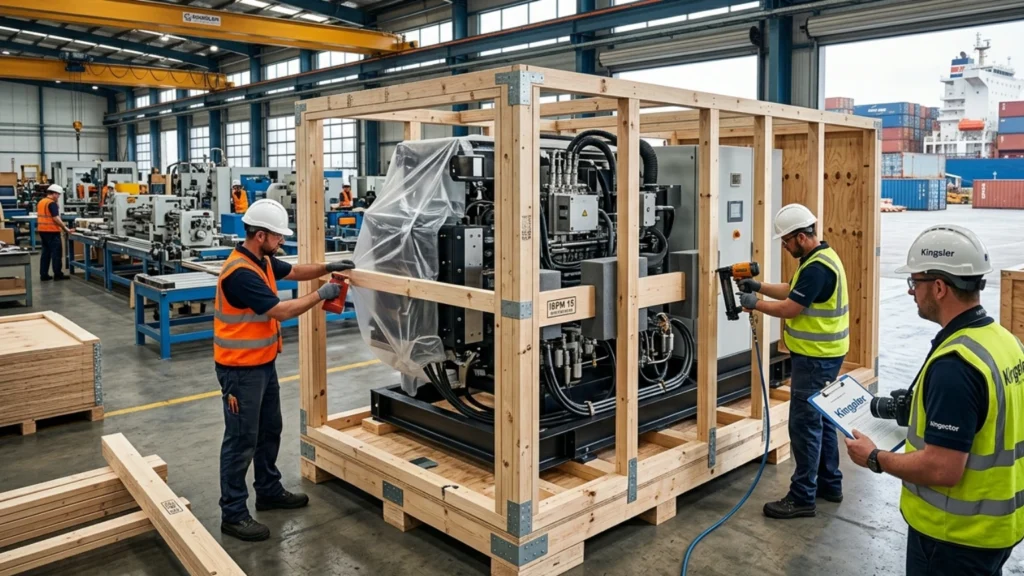
When industrial machinery arrives damaged, corroded, or shifted inside its container, the cost goes far beyond the repair bill. Production timelines collapse, supplier disputes drag on, and the machine that was supposed to solve a problem becomes the problem. What makes this worse is that most damage is preventable, and most of it starts not at the port but in the planning stage, long before the machine is packed. Proper packing machinery sea freight standards prevent avoidable transit damage.
Every shipment must meet ISPM 15 wood crating compliance rules. Poor packing is rarely just a supplier failure. It is a sourcing failure, and successful machinery sourcing from China starts with clearly defined packing standards. When buyers do not specify packing standards, factories default to whatever is cheapest and fastest. The result shows up six weeks later at the destination port. Professional industrial machinery crating prevents cargo movement.
Poor packing machinery sea freight practices increase these risks. Not like others. Kingsler Machinery steps in while things are still being packed inside factories, before containers shut. Moisture barriers and crate quality are checked, and paperwork is verified. export crating heavy equipment is often rushed without inspections. Most buyers underestimate the importance of packing machinery sea freight. Customs delays happen without ISPM 15 wood crating compliance.
Why Packing Industrial Machinery for Sea Freight Is Different from Regular Freight
Ocean freight puts machinery through conditions far beyond road or air transport. A machine packed for short-distance trucking can still suffer major damage after a 30–45 day sea voyage. Salt air, constant vibration, and shifting temperatures inside containers all combine to create rust and long-term mechanical stress.
During transit, cargo is exposed to shocks from loading and unloading, and weak internal bracing allows movement inside the crate. This can lead to hidden alignment damage that only appears during commissioning.
Why is sea freight risky for machinery?
Professional packing machinery sea freight reduces long-distance transport failures. High humidity corrodes unprotected metal surfaces during transit. Vessel vibration works on moving parts, fasteners, and welds over weeks at sea. Poorly secured cargo shifts during loading, unloading, and rough weather. Movement control is critical in packing machinery sea freight.
Condensation builds inside sealed containers and causes rust on internal components. Weak or undersized crating fails under the stacking and impact loads common at container terminals. Before production begins, buyers should verify a factory in China to confirm the supplier has the capability to meet export packing and crating standards.
Worried about machinery damage during long sea voyages? Contact Kingsler Machinery for export packing inspections and factory verification before your cargo leaves China.
Machine Preparation: What to Do Before the Crate Is Built
No crate compensates for a machine that was not prepared correctly before packing began. Preparation is what separates machinery that arrives ready to commission from machinery that arrives requiring service. Strong foundations are essential for packing machinery sea freight.
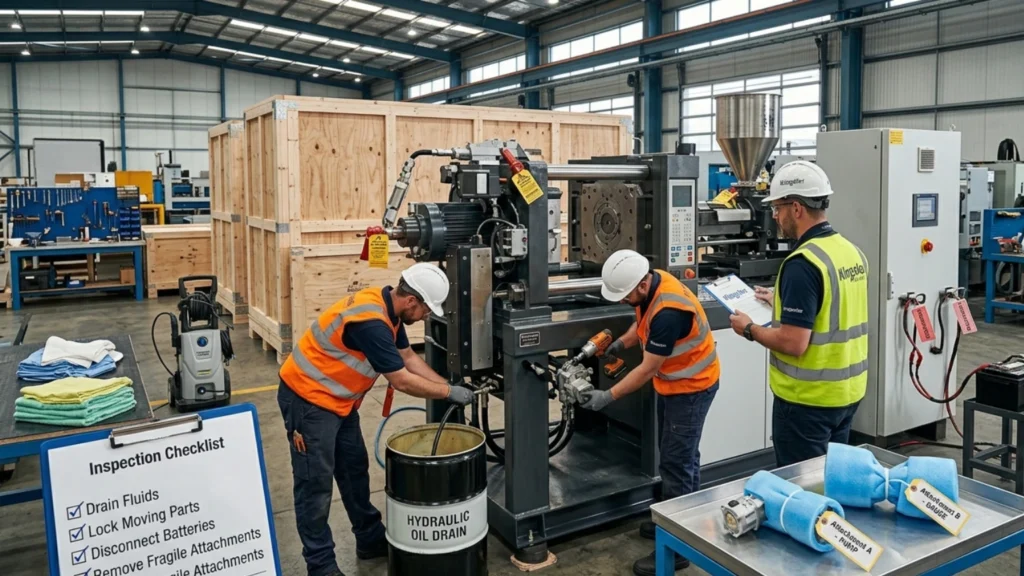
Step 1: Drain All Fluids
Fuel, oil, and coolant must be removed before the machine is moved or packed. Fluids leak under pressure changes and vibration during transit, contaminating other cargo and triggering customs holds at destination ports. Internal protection improves packing machinery sea freight reliability. Most carriers and importing authorities require proof of fluid removal before loading is permitted.
Step 2: Disconnect Batteries and Secure Electrical Connections
Before departure, every battery gets unplugged; safety hinges on cutting power completely. Wires, plugs, and bundled lines stay fastened down, held firm against movement. Shaking over long stretches turns once-stable links into broken paths. Humidity control is a major factor in packing machinery sea freight.
Even joints that looked solid pre-trip can come undone by constant motion. Weak materials reduce the wooden crate sea freight durability. All wooden crates used for international shipping must meet official ISPM 15 guidelines to prevent customs delays, cargo rejection, and costly repacking at the destination port.
Step 3: Lock or Pin All Moving Parts
Every arm, boom, blade, conveyor belt, and articulating component must be physically immobilized before the machine enters the crate. Moving parts that are free to travel even a small distance under vibration cause progressive internal damage across a long voyage. Container stability is part of safe packing machinery sea freight.
This is one of the most commonly skipped steps on factory floors, working under time pressure. Crate selection directly affects packing machinery sea freight outcomes.
Step 4: Remove and Separately Pack Fragile Attachments
Bent or loose parts come off before building the box. One by one, every part is wrapped in foam, marked well, and written down so it fits back together later. If things stay attached, they snap when the crate goes up or moves around. Weight distribution matters in packing machinery sea freight.
Step 5: Clean the Machine Thoroughly
Oversized cargo requires specialized packing machinery sea freight methods. Power washing to remove dirt, grease, and organic material is not optional for most international shipments. Agricultural and biosecurity inspections at destination ports target exactly this type of contamination. Machines that arrive with soil, plant matter, or biological residue are held at customs, fumigated at the importer’s cost, or rejected outright.
How Industrial Machinery Is Crated for Export
China’s export rules affect wooden crate sea freight approval. Heavy-duty crates guard industrial gear against bumps, water, shaking, and moving around while shipped by ocean. Not merely a container, this setup spreads weight evenly, soaks up jolts, and holds the machine steady just as it sat when built. Compliance failures damage packing machinery sea freight operations. Kingsler Machinery reviews ISPM 15 wood crating compliance before export.
Reinforced Skid Base
Underneath it all sits the skid, doing its job, holding everything together. Built from timber or steel, these bases match the machine’s size and heft. Stability comes first: room for forklifts, points for cranes, and even weight spread over the container floor. Most claims come from poor packing machinery sea freight execution. When too small or flimsy, though, trouble follows. Many breakdowns during transport trace back to a poor base. Strength here prevents disaster later.
Wooden Crate Frame Construction
Closed systems improve wooden crate sea freight protection. Export-grade timber framing is built to carry the combined weight of the machine and withstand the dynamic loads of ocean freight. Fastening methods matter; staples and light nails are inadequate for heavy equipment.
Buyers who choose a machinery manufacturer in China based on technical capability and quality systems are far less likely to face packing-related damage. Properly constructed frames use structural bolts, corner brackets, and load-bearing cross members. Following every step improves packing machinery sea freight safety.
Internal Bracing and Shock Protection
Blocking and bracing fill the space between the machine and the crate walls so the machine cannot move in any direction. Foam padding and anti-vibration materials protect contact points. A machine that is fully braced internally has nowhere to go, regardless of how rough the voyage is.
Open vs Closed Export Crates
Heavy machines too big for boxes go in open crates, lighter and easier for cranes, though skies can soak them. When gear needs shelter, closed wood cases wrap it tight against wet air and bumps during moves. Size matters. So does fragility. Route conditions tip the scale one way or another. Open designs expose the wooden crate sea freight setup to the weather.
Moisture and Corrosion Protection
Vapor barrier bags wrap the machine inside the crate before it is sealed, creating a moisture-proof envelope. Vacuum sealing is used for highly sensitive equipment. Desiccants are placed inside the barrier to absorb any residual humidity before it contacts metal surfaces. The quantity of desiccants must be calculated against the voyage duration; under-specifying is one of the most common and invisible mistakes.
Container Securing Methods
Once the crated machine is inside the container, it must be secured to the container floor and walls using ratchet straps, chains, and timber blocking. An unsecured crate moves freely during vessel pitch and roll, even a heavy machine will shift if the gaps around it are not filled and tied off. Documentation matters in export crating heavy equipment shipping.
Types of Export Crates Used for Industrial Machinery
The right crate type is determined by the machine’s size, weight, fragility, and destination. There is no universal answer, and using the wrong type is as risky as using no crate at all.
- Closed Wooden Export Crates: Full enclosure on all sides. Best for sensitive or high-value equipment that needs protection from weather, impact, and rough handling at every stage of the journey.
- Open Crates for Oversized Machinery: Used where a full enclosure is not practical due to size or dimensions. The machine is exposed, so anti-corrosion wraps and coatings are essential before loading.
- Skid-Mounted Machinery Bases: For robust machinery where a full enclosure is not needed. The machine sits directly on the skid base, making loading and unloading faster, but protection is minimal.
- Steel-Reinforced Export Crates: Specified when the machine is too heavy for timber framing alone. Heavier and more expensive, but necessary when structural load demands it.
- Vacuum-Sealed Export Packing: Combines a vapor barrier with desiccants and full vacuum sealing. Used for CNC machines, electronics, and precision equipment that cannot tolerate any moisture exposure during transit.
- Flat Rack Container Packing: For machinery too wide or tall for a standard container. The machine is loaded onto an open flat rack, secured with heavy-duty chains, and all exposed surfaces are wrapped for weather protection.
Choosing the right export crate is not just about packaging; it is about protecting your machinery investment from costly damage, delays, and corrosion during sea freight. From closed wooden crates to flat rack packing, each solution plays a key role in keeping heavy equipment secure, compliant, and ready for operation upon arrival.
Moisture Protection Methods for Machinery Shipping
Wetness often ruins machines on ships, yet smart steps cut most risks. Inside these plastic wraps, gear stays dry when air can’t get in. Sealing matters gaps or rips invites damp even behind thick layers. Tiny drying crystals go into each wrap before closing, pulling the wet out of hidden spots. Too few beads, though? Ocean trips beat them down, fog forms, rust follows.
A layer of defense comes from rust-blocking paints, special films that fight corrosion, along with greased coverings placed on bare metal and finely crafted components prior to packing. Flat racks require specialized export crating heavy equipment methods. Instead of just blocking air exposure chemically, they also shield surfaces physically.
How the shipping box behaves matters too, especially as goods travel across hot then chilly zones. Airflow-friendly boxes combined with moisture-absorbing wall inserts lessen dripping inside, which happens when wetness gathers overhead and falls down on equipment mid-journey. Reliable packing machinery sea freight starts before the container is sealed.
FCL and Flat Rack Packing Requirements for Heavy Machinery
Heavy machinery cannot be packed using the same method for every shipment. The type of container used changes how the machine must be secured, balanced, and protected during ocean transport.
Incorrect container packing can lead to cargo shifting, damaged equipment, customs delays, and expensive rework at the port. That is why every export shipment must follow the right packing standard from the start.
FCL Packing Requirements
Full container loads must be packed with correct weight distribution across the container floor. Stable skid bases support exporting heavy equipment safely. Concentrated loads on a small footprint can exceed floor strength ratings, causing structural failure during handling. Blocking and bracing must prevent any movement in all six directions: forward, backward, side to side, and vertically. Container securing is inspected at many major ports, and inadequate lashing is grounds for offloading and re-securing at the shipper’s cost.
Flat Rack Container Packing Standards
Heavy equipment riding on flat racks gets held down by chains built to handle its full weight, tied into strong spots welded onto the rack. Where the machine’s body lacks strength, extra bracing steps in to take pressure off weak zones. Parts that could get hit by rain or dust are wrapped, painted, or both since nothing blocks outside exposure out there in the open.
Sea Freight Packaging Standards for Export Machinery
Out on the docks, rules for how goods must be packed start with a baseline that shipping companies and harbors stick to without exception. Turn up with machinery wrapped in ways that miss those specs? The gate might slam shut, force redoing the job at your cost, or wipe out any claim rights if something breaks. Going by the book isn’t good enough; staying ahead is what keeps shipments moving.
Export Packing Requirements From China
Wood used in shipping items from China has to meet International Standards For Phytosanitary Measures No. 15 (ISPM 15) rules those say it must be heated properly before moving across borders. If it fails, many arrival countries take the crates away, burn them, which means the gear shows up naked on a dock. Inspectors inside China check more than just wood; they look at how heavy boxes are claimed to be, whether labels match what’s needed, and sometimes even demand photos showing exactly how things were boxed. Each rule sticks because skipping one can halt everything far from home.
Common Packing Mistakes That Lead to Damaged Machinery
Factories often rush export crating heavy equipment without inspections. Buyers who have experienced machinery damage almost always trace it back to one of these errors:
- Using uncertified wood that fails ISPM 15 inspection at the destination port, the crates are destroyed, and the machine is left exposed
- Skipping the vapor barrier bag entirely, leading to corrosion discovered only when the crate is opened
- Under-specifying desiccants, moisture damage builds gradually over a 30–45-day voyage and is invisible until it isn’t
- Not draining fluids before crating leaks contaminates other cargo and triggers customs investigations
- Poor internal bracing that allows the machine to shift inside the crate, causing impact damage to precision components
- Loading the container without filling gaps, the crate moves freely during vessel pitch and roll when there is nothing holding it in place
- No photographic documentation before sealing, no evidence for insurance claims, or supplier dispute resolution when damage is discovered
Working with a sourcing partner who verifies packing at the factory before the container is sealed eliminates most of these mistakes before they become problems.
Worried about machinery damage during sea freight shipping? Get in touch with Kingsler Machinery for factory-level packing inspections and export crating verification that helps prevent costly shipping mistakes before your container is sealed.
Checklist Before Shipping Machinery by Sea
Export teams handling industrial machinery crating must verify load balance. Poor industrial machinery creating increases repair costs. Before any container is sealed, every item on this list should be confirmed:
- Drain all fluids, fuel, oil, and coolant
- Disconnect all batteries
- Lock and pin all moving parts
- Clean machinery thoroughly and pass agricultural inspection requirements
- Use ISPM 15-certified heat-treated timber for all wood packaging
- Install correctly calculated desiccant quantities inside vapor barriers
- Apply vapor barrier bags, sealed completely
- Reinforce skid bases to the machine’s weight and footprint
- Secure machinery inside the container with lashing and blocking, no gaps
- Photograph all packed and loaded cargo before the container is sealed
In sea freight shipping, even a small packing mistake can turn into a costly problem once the vessel is at sea. Following a proper machinery shipping checklist helps reduce damage, prevent customs delays, and ensure equipment arrives safely, securely, and ready for operation.
Documentation to Include With Your Packing
Correct industrial machinery crating protects precision equipment. Good packing without the right paperwork still causes delays, holds, and disputes at customs:
- Packing List itemised breakdown of all crates, weights, dimensions, and contents
- The commercial invoice must match the packing list exactly; discrepancies trigger customs examinations
- Bill of Lading confirms cargo details and the transfer of ownership at each stage
- ISPM 15 compliance documentation, proof of heat treatment for all wood packaging used
- Photographs of packed and loaded machinery are essential for insurance claims if damage is discovered on arrival
- Certificate of Origin required by most importing countries for tariff classification and duty assessment
Missing or incorrect shipping documents can delay machinery shipments even when the packing is done perfectly. Accurate paperwork helps ensure smooth customs clearance, faster delivery, and better protection against disputes or insurance claims during sea freight transport.
Final Thoughts
Packing machinery for sea freight is a quality control decision, not just a logistics task. The most expensive mistakes are the ones that look fine from the outside, such as corrosion, misalignment, and structural damage, which only reveal themselves after the machine is unpacked and commissioning begins. Professional industrial machinery crating prevents cargo movement.
Kingsler’s approach is to verify packing at the source on the factory floor in China before the container is sealed and the voyage begins. Buyers who specify standards clearly, verify compliance before departure, and document every stage consistently arrive with machines that work.
Need help packing and shipping industrial machinery safely from China? Contact Kingsler Machinery today for professional export crating, factory inspection, and sea freight packing support before your shipment leaves the factory.
FAQs
What type of crate is best for shipping industrial machinery by sea?
The best crate depends on the machine’s size, weight, and sensitivity. Closed wooden export crates are ideal for most industrial machinery because they provide full protection against impact, moisture, and rough handling.
What is ISPM 15, and does it apply to all machinery shipments from China?
International Plant Protection Convention ISPM 15 is an international standard that requires all solid wood packaging materials, including export crates and pallets, to be heat-treated and marked to prevent the spread of pests.
How do I protect machinery from moisture during sea freight?
Machinery is typically protected using vapor barrier bags, desiccants, rust-preventive coatings, and vacuum sealing when necessary. These methods help prevent condensation and corrosion during long ocean voyages, especially for CNC machines and other precision equipment.
Who is responsible for packing: the supplier or the buyer?
The supplier usually performs the packing, but the buyer is responsible for defining the required standards. If expectations are not clearly specified, factories often use the most economical method, which may not provide adequate protection for international sea transport.
Does poor packing affect my customs clearance?
Yes. Poor packing can lead to customs delays if wood packaging lacks ISPM 15 certification, if machinery contains soil or biological residue, or if documentation does not match the cargo. In severe cases, authorities may order fumigation, re-packing, or even reject the shipment.
What documentation should accompany a crated machinery shipment?
A properly packed machinery shipment should include a commercial invoice, packing list, bill of lading, ISPM 15 compliance documentation, certificate of origin, and photographic records of the packed cargo. These documents support customs clearance, insurance claims, and dispute resolution.
Can I ship oversized machinery that does not fit in a standard container?
Yes. Oversized machinery is commonly shipped using flat rack containers or other specialized equipment. The machinery must be secured with heavy-duty chains and protected with weather-resistant wrapping because it remains partially exposed during transport.