


Blogs
Factory Inspection Report China: How to Read and Understand It
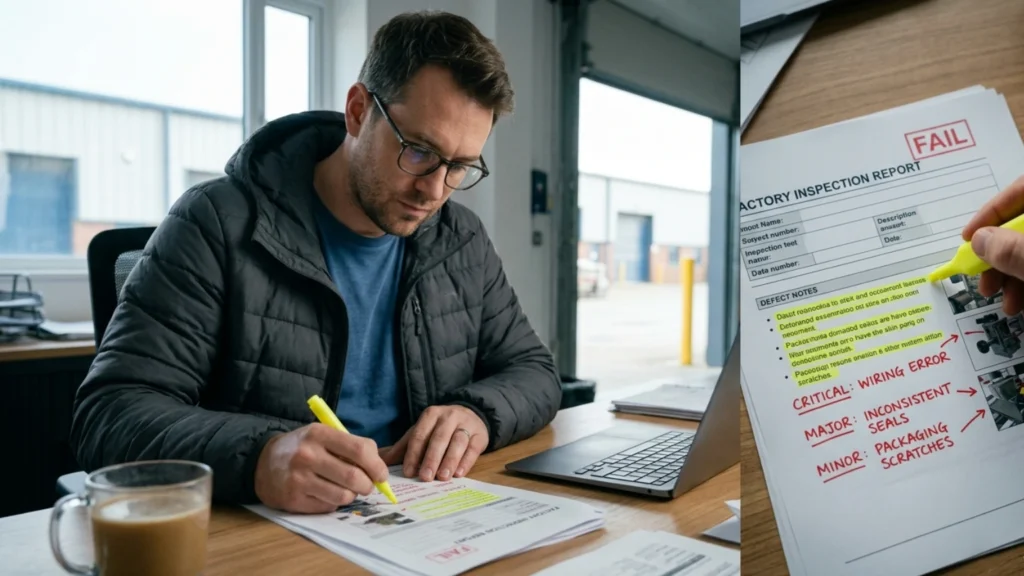
A factory inspection report is a written document produced after an on-site quality check of goods or machinery at a Chinese supplier’s facility. It records what was examined, how many items were tested, what defects were found, which tests were performed, and whether the shipment is approved for release.
Most buyers scan for the word “pass” and approve shipping immediately. That habit is expensive. The defect counts, test results, AQL thresholds, and inspection photos sitting beneath that word contain the real quality story, and missing them is how faulty goods reach customers, chargebacks accumulate, and supplier relationships deteriorate.
This guide from Kingsler Machinery explains every section of a China factory inspection report in plain language, so you can make confident, fact-based shipment decisions every time.
What Is a Factory Inspection Report?
A factory inspection report is an official quality document created by a trained inspector, either from a third-party firm or an in-house team, after physically examining goods at a Chinese factory before shipment. The report provides an objective, structured record of product quality at the point of manufacture, before items leave the supplier’s control.
Buyers use factory inspection reports to confirm goods meet contracted specifications, identify defects before products reach customers, create documented evidence for supplier disputes, and decide whether to approve, hold, or reject a shipment.
A China quality inspection report differs from a factory audit report. A factory audit evaluates the production facility, its processes, certifications, and management systems. A factory inspection report evaluates a specific shipment of finished goods. Our guide on pre-shipment inspection in China covers how both fit into a complete sourcing process.
What Does a Factory Inspection Report Contain?
A complete factory inspection report contains eight standard sections. Each one answers a specific question. Reading them together, not in isolation, gives the full picture of shipment quality.
1. Report Header and Order Details
This section identifies the supplier name, factory address, inspection date, purchase order number, product name, and the inspector’s credentials. Verify these details match your purchase order before reading anything else. A mismatch here, a wrong factory address, or a wrong PO number means the report may not cover your actual shipment.
2. Quantity Summary
| Field | What to Look For |
| Order Quantity | Should match your PO |
| Quantity Available | Should be close to order quantity |
| Quantity Inspected | Must meet AQL sample size requirements |
If the quantity inspected is significantly below the required AQL sample size for your order volume, the inspection findings are statistically unreliable. Flag this immediately.
3. Product Specification Checklist
Inspectors compare physical samples against your approved specifications: dimensions, materials, color, labeling, packaging type, and any agreed technical standards. Each item is marked as conforming or non-conforming, with photos and notes for deviations. Having a detailed machinery specification sheet from your supplier before inspection begins makes this comparison significantly more reliable.
Pay close attention to any “non-conforming” markings here. Even items marked minor deviations can trigger customer complaints at scale.
4. Inspection Method and Sampling Plan
This section states whether inspectors examined every unit (100% inspection) or used statistical sampling (AQL-based). For most shipments, AQL sampling is standard. The sampling plan determines how many units were pulled from the batch and how defect findings translate into pass/fail decisions.
Understanding the sampling method is critical. A pass result from a small, undersized sample carries far less confidence than one drawn from a statistically correct sample size. If you are unsure which approach suits your order, our guide on full inspection vs spot check explains when each one makes sense.
5. Defect Classification and Count
This is the most important section of any factory inspection report. Defects are divided into three categories, each with its own tolerance threshold.
Quick Reference: Defect Types
- Critical defects: Safety risks; zero tolerance; instant rejection.
- Major defects: Functional failures; limited tolerance (typically AQL 2.5).
- Minor defects: Cosmetic issues; higher tolerance (typically AQL 4.0).
Do not look only at totals. Read the specific defect descriptions and cross-reference them with the inspection photos. A “minor” label applied to a serious issue is a red flag worth questioning. For machinery buyers, knowing the most common packaging machine defects from China helps you know exactly what to watch for in this section.
6. Testing Results
Depending on the product type, this section may include functional tests (does the product operate correctly), safety tests (does it meet electrical, chemical, or structural safety standards), performance tests (does it hold up under operating conditions), and packaging tests (can it survive shipping without damage).
For machinery, testing results are especially critical. Look for whether tests were actually completed, not just listed. A test field left blank or marked “not applicable” without explanation is a warning sign.
7. Inspection Photos
Photos are objective evidence. They should show the production floor, batch labeling, defect close-ups, packaging condition, and for machinery, welds, connections, seals, and control panels.
Match each photo to its corresponding written finding. If a defect is described as a “light surface scratch” but the photo shows a structural crack, the written report is inaccurate.
8. Final Result: Pass, Fail, or Conditional
| Result | Meaning |
| Pass | Defect counts fell within agreed AQL thresholds; all tests passed |
| Fail | One or more defect categories exceeded AQL limits, or a test failed |
| Conditional Pass | Minor issues noted; shipment may proceed with agreed-upon corrective action |
A “Conditional Pass” is not a clean pass. Read the conditions stated and confirm in writing with your supplier that they have been addressed before releasing the shipment.
How to Read Defect Classifications in a Factory Inspection Report
Critical Defects
A critical defect is any flaw that poses a risk to the safety or health of the end user or that violates mandatory regulatory requirements. Examples include exposed electrical wiring, toxic material content above legal limits, structural failure under normal use conditions, and choking hazards in children’s products.
Zero critical defects are acceptable. A single critical defect finding results in automatic rejection of the entire batch, regardless of how the rest of the inspection performed. If your report shows even one critical defect and still carries a “Pass” result, the report is incorrect. Do not ship.
Major Defects
A major defect is a flaw that significantly impairs the product’s intended function, is likely to cause customer returns, or fails to meet the primary performance requirements stated in your purchase order. Examples include a packaging machine that fails to achieve consistent seals, a motor that does not reach rated output speed, or a garment with incorrect sizing that renders it unwearable.
The typical AQL tolerance for major defects is 2.5, meaning no more than 2.5% of the inspected sample may carry major defects before the batch fails. When major defect counts are high, the entire production run likely requires rework before shipment.
Minor Defects
A minor defect is a cosmetic flaw that does not affect product function or safety, such as surface scratches, slight color variations, or minor misprints on packaging.
The typical AQL tolerance for minor defects is 4.0. However, if minor defect counts are consistently near the upper limit across multiple inspections of the same product, this signals a systemic quality control problem at the factory, not just isolated cosmetic variation. Our quality control tips go deeper on how to identify and address these patterns before they become a recurring issue.
What Is AQL and How Does It Work in Inspection Reports?
AQL (Acceptable Quality Limit) is the maximum percentage of defective units in a shipment that both buyer and supplier have agreed to accept. It is the statistical framework that turns raw defect counts into a pass or fail decision.
How AQL Sampling Works: Step by Step
Determine order size: the total number of units in the shipment batch. Select AQL level: The buyer and supplier agree on thresholds before inspection, commonly AQL 0 for critical, 2.5 for major, and 4.0 for minor. Calculate sample size using ISO 2859-1 tables based on order quantity. For example, a batch of 1,200 units at General Inspection Level II requires a sample of 125 units. Inspectors examine the required number of units and record each defect by category. Each AQL level has an acceptance number (Ac) and rejection number (Re). If defects in any category equal or exceed the rejection number, that category fails. If any category fails, the shipment fails, even if other categories passed.
AQL Reference Table (Common Settings)
| Defect Type | AQL Level | Acceptance No. (125 units) | Rejection No. (125 units) |
| Critical | 0 | 0 | 1 |
| Major | 2.5 | 7 | 8 |
| Minor | 4.0 | 14 | 15 |
Without knowing the AQL settings used in your report, you cannot judge whether the pass result is meaningful. Always confirm AQL thresholds were agreed upon in writing before inspection begins, not after.
How to Analyze Inspection Photos in a Factory Inspection Report
Photos are the fastest way to verify whether the written findings in a factory inspection report are accurate. Follow this three-step review process.
For every defect listed in the report, find the corresponding photo and confirm the severity shown in the image matches the category assigned in writing. Discrepancies between written description and photographic evidence suggest the report has been softened.
Review packaging photos carefully. Look for clean, undamaged box surfaces, correct labeling and barcodes, adequate cushioning between units, and proper sealing of outer cartons. Torn, wet, or poorly packed boxes in inspection photos strongly suggest product damage before goods even leave the factory.
When purchasing machinery, inspect photos of welds and seams, electrical connection points, hydraulic or pneumatic fittings, safety guards, and control panel wiring. Blurry, distant, or missing photos of critical components are a reason to request additional documentation before approving shipment.
Common Red Flags in a China Factory Inspection Report
The following warning signs warrant direct follow-up before releasing any shipment.
- Photos missing near defect findings: If a defect is noted in writing but no corresponding photo exists, ask why. Inspectors are required to photograph defects. Missing photos may indicate the defect was worse than recorded.
- Vague defect descriptions: Terms like “minor surface issue” or “slight variation” without measurements or location details make it impossible to assess actual impact. Request specifics.
- High defect counts labeled as acceptable: If the defect section shows dozens of issues but the summary reads “Pass,” verify the AQL thresholds being applied. Some inspection firms use overly lenient AQL settings unless buyers specify otherwise.
- Incomplete or skipped tests: Every test listed in your purchase order requirements should appear in the report with a result. Blank fields or “N/A” on required tests mean the check was not done.
- Conditional pass with no specific corrective actions listed: A conditional result without documented corrective requirements gives suppliers room to ship without fixing anything.
Real Example: Reading an Inspection Report for a Packaging Machine
A buyer sourcing a packaging machine from China received a report marked “Conditional Pass.” The conditions section referenced inconsistent sealing performance during testing.
Digging into the testing results section revealed the sealing bar temperature varied by ±18°C between test cycles, well outside the ±5°C tolerance specified in the purchase order. The inspectors had noted the variance but classified it as a minor performance issue.
The buyer cross-referenced this against the defect classification section. A sealing temperature variance of this magnitude causes inconsistent package integrity, a functional failure that meets the definition of a major defect, not a minor one.
Action taken: Shipment held. The factory was required to recalibrate the sealing mechanism and provide test data showing a ±5°C variance over 50 consecutive cycles. Re-inspection conducted four days later confirmed compliance.
Outcome: A four-day delay prevented a recall scenario that would have required retrieving, repackaging, and reshipping an entire container load, a cost and timeline impact of three to six weeks.
This is the practical value of reading every section of a factory inspection report, not just its final result. It is also why understanding how to avoid bad machine sourcing in China before placing an order saves far more than it costs.
What to Do When a Factory Inspection Report Fails
A failed inspection report is not the end of the sourcing process. It is specific, actionable information about what needs to be fixed. Follow this sequence.
Step 1: Request Rework with Documented Requirements
Send the factory a written rework instruction that references specific defect findings from the report by section and photo number. State exactly which defects must be corrected, to what standard, and by which deadline. Verbal agreements are not sufficient.
Step 2: Conduct a Re-Inspection
After the factory confirms rework is complete, arrange an independent re-inspection. Do not accept a photo update or supplier confirmation as a substitute for physical re-inspection. Re-inspection verifies that original defects are corrected and that the rework process has not introduced new problems.
Step 3: Delay Shipment Until Re-Inspection Passes
Do not release the shipment under time pressure before re-inspection results are confirmed. Shipping a batch with known, unresolved defects transfers all cost and liability, customer returns, replacements, and reputational damage entirely to the buyer.
A brief delay at the pre-shipment stage is always less costly than a product failure after delivery.
The Role of Third-Party Inspection Companies
Third-party inspection firms conduct factory inspections independently. They have no financial relationship with the supplier and no stake in whether a shipment is approved. This independence is their primary value.
Reputable third-party inspectors follow standardized procedures, use calibrated testing equipment, and produce documented reports that carry legal standing in supplier disputes. Their findings can support warranty claims, chargebacks, and customs compliance documentation in ways that supplier-issued quality certificates cannot.
For high-value orders, machinery purchases, or new supplier relationships, third-party inspection is standard practice, not an optional add-on. If you are working with a supplier for the first time, pairing inspection with factory verification services in China gives you a far more complete picture of who you are actually dealing with before any goods change hands.
Best Practices for Reading a Factory Inspection Report
Apply this sequence every time you receive a factory inspection report from China.
Verify report header details against your purchase order before reading any findings. Check quantity inspected against the required AQL sample size for your order volume. Read the defect section completely, including counts, categories, descriptions, and photos. Review all testing results and confirm every required test was completed. Match inspection photos to written findings and flag any discrepancies. Confirm AQL thresholds used and apply them to defect counts yourself. Read the final result last, after you have formed your own assessment from the data above.
If your independent assessment of the data does not match the stated pass or fail result, raise the question with your inspection firm before making a shipment decision.
Factory Inspection Report Checklist: Before Approving Any Shipment
- Supplier name, factory address, and PO number match your purchase order.
- The quantity inspected meets the required AQL sample size for your order volume.
- Zero critical defects are recorded.
- Major defect count falls within your agreed AQL 2.5 acceptance number.
- Minor defect count falls within your agreed AQL 4.0 acceptance number.
- All required functional, safety, and performance tests are completed with results recorded.
- Inspection photos are present for all noted defects and are consistent with written descriptions.
- Any “Conditional Pass” result has specific, documented corrective actions attached.
- The report was issued by an independent third-party inspector (preferred), or the basis for trusting an internal report is documented.
Final Thoughts
A factory inspection report is one of the most important documents in your entire sourcing process, and reading it properly is what separates buyers who catch problems early from those who discover them after a container has already landed.
For machinery orders especially, where a single functional failure can disrupt an entire production line, the stakes of skipping a thorough review are simply too high. Getting the inspection right, working with independent third-party firms, and knowing exactly what to look for in every section of the report is not extra work. It is the work.
If you are sourcing machinery from China and want a team that handles inspection coordination, supplier verification, and quality control on the ground, contact Kingsler Machinery and let us make sure your next shipment arrives exactly as ordered.
Frequently Asked Questions
What is a factory inspection report?
A factory inspection report is a quality document produced after a physical examination of goods at a Chinese supplier’s facility. It records defect findings, test results, quantity data, and inspection photos, and issues a pass, fail, or conditional recommendation for the shipment.
How do I read a factory inspection report correctly?
Start with the defect classification section and testing results, not the final pass/fail result. Verify AQL thresholds, check that all required tests were completed, and cross-reference every defect finding against the corresponding inspection photo.
What is AQL in a factory inspection report?
AQL (Acceptable Quality Limit) is the agreed maximum percentage of defective units allowed in a shipment before it fails inspection. Standard settings are AQL 0 for critical defects, AQL 2.5 for major defects, and AQL 4.0 for minor defects.
What should I do if my factory inspection report fails?
Request rework from the factory with written requirements referencing specific report findings. After rework is complete, arrange an independent re-inspection.
Can I trust an inspection report issued by the factory itself?
Factory-issued inspection reports have an inherent conflict of interest. The factory benefits from shipment approval. For objective findings, use an independent third-party inspection firm with no commercial relationship to your supplier.
What is the difference between a factory inspection report and a factory audit report?
A factory inspection report evaluates a specific finished goods shipment. A factory audit report evaluates the production facility itself, its processes, certifications, equipment, and quality management systems. If you are still evaluating a new supplier, a remote factory audit in China is a practical first step before committing to a full order.
Get In Touch
We’d love to hear from you! Reach out with your questions or feedback.
- +8618957999107 , +8615867974765
- support@kingslermachinery.com
- 1711, Wuyue No.1 Mansion, Jiangdong Road, Yiwu City, Jinhua, Zhejiang Province