


Blogs
How to Handle a Customs Hold Imported Machinery
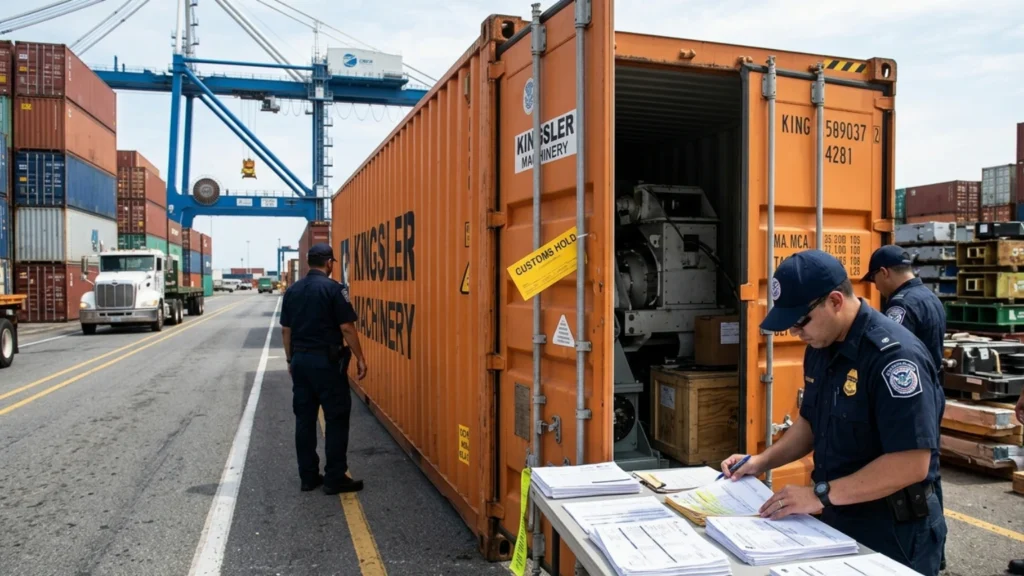
A customs hold on imported machinery is one of the most disruptive events in an import cycle. Production timelines stall, storage fees accumulate, and your team spends days chasing updates instead of moving goods. For importers sourcing equipment from China, it is not a rare exception; it is a risk on every shipment.
The good news is that most customs hold imported machinery situations are resolvable. A customs hold imported machinery case is rarely permanent. The importers who recover fastest understand why holds happen, what CBP needs, and how to prevent recurrence. This guide gives you a clear roadmap for handling any customs hold imported machinery scenario. Importers handling oversized industrial cargo often work with experienced large equipment services from China providers to reduce documentation errors, improve shipping coordination, and avoid unnecessary customs delays.
What Is a Customs Hold for Imported Machinery?
A customs hold is when US Customs and Border Protection (CBP) temporarily stops a machinery shipment for inspection, document verification, or compliance review before releasing it.
A customs hold imported machinery notice does not mean your goods are seized or rejected. Understanding customs-held imported machinery procedures helps you respond correctly from day one. It means CBP has flagged the shipment for further review and will not release it until specific conditions are satisfied, whether that is a document correction, an inspection, or a compliance confirmation.
According to US Customs and Border Protection, importers are responsible for ensuring all shipments comply with applicable laws and regulations at the time of entry, making preparation the most effective defense against a hold.
Why It Happens
Machinery customs held in the USA typically fall into four categories:
- Document mismatch: invoice values, descriptions, or parties do not match what was declared
- HS code issues: incorrect or ambiguous tariff classification triggers review
- Random inspection: CBP selects shipments for routine examination regardless of compliance status
- Missing compliance information: absent safety certifications, permits, or regulatory declarations
Common Reasons for Customs Hold on Machinery Imports
Understanding machinery customs holds reasons. The USA is the first step toward preventing them, and understanding customs’ hold on imported machinery rules is what helps you resolve them when prevention fails. The most frequent triggers for a customs hold on an imported machinery case include:
- Incorrect HS Code Classification: Assigning the wrong Harmonized System code is the leading cause of CBP customs holding machinery import cases. The HS code determines duty rates, regulatory requirements, and admissibility. An incorrect code can trigger automatic review or result in underpayment of duties, both of which stall clearance.
- Missing or Incorrect Documents: CBP requires a complete commercial invoice, packing list, bill of lading, and any applicable permits or certificates. Missing, inconsistent, or poorly prepared documents are the most common driver of customs clearance delay for machinery China imports, particularly for equipment sourced from manufacturers unfamiliar with US documentation standards.
- CBP Random Inspection: Not all holds are triggered by errors. CBP conducts random examinations on a percentage of all incoming shipments as a standard border security measure. A CBP customs hold on machinery imports triggered by random selection cannot be predicted, but having complete, accurate documentation on file ensures it resolves quickly.
- Regulatory Compliance Issues: Certain categories of machinery require prior approval, safety certification, or agency clearance before import. Equipment that falls under FDA, USDA, EPA, or CPSC jurisdiction and lacks the required documentation will trigger a hold until compliance is confirmed.
Step-by-Step Process When Your Machinery Is Held at Customs
When a customs hold on imported machinery notice arrives, a structured response saves days. Every customs hold imported machinery case follows roughly the same resolution path. Here is how the process works from notification to release.
Step 1: Identify the Hold Reason
Check the CBP notice or contact your customs broker for the specific hold type. CBP issues different hold categories; a CF-28 (Request for Information) or CF-29 (Notice of Action) will tell you exactly what is needed. Knowing why shipments get held at customs is essential before taking any action, since the wrong response can add delays rather than resolve them.
Step 2: Submit Required Documents
Gather and submit corrected or missing documents immediately, including the corrected invoice, HS code clarification, packing list, and compliance certificates. Every day of delay in responding to a CBP customs hold on machinery imports adds storage and demurrage costs.
Step 3: Pay Duties or Fees
If the hold stems from a duty underpayment, resolve outstanding charges before resubmitting. CBP will not release goods while financial obligations remain open.
Step 4: Customs Review
CBP reviews submitted documents and may conduct a physical examination. Providing detailed technical specifications, intended use, and origin evidence can accelerate the reviewer’s assessment.
Step 5: Release of Goods
Once CBP is satisfied, the hold is lifted. For straightforward customs, holding imported machinery cases, the full process takes one to four days with prompt action.
How to Release Machinery from Customs Hold Quickly
To release machinery from a customs hold quickly, importers must provide accurate documentation, correct HS codes, and respond promptly to CBP requests.
Knowing how to release goods from customs hold efficiently comes down to preparation and responsiveness. The steps for how to release goods from customs hold are straightforward; the challenge is executing them quickly. The longer you wait to respond to a CBP inquiry, the longer your goods sit at the port.
Fast Resolution Tips
The following steps consistently shorten customs clearance delay machinery: China imports resolution times:
- Respond quickly to CBP inquiries: CBP typically sets a response window. Missing it triggers further delays and can escalate the hold to a more serious review category.
- Work with a licensed customs broker: brokers have direct CBP communication channels and know exactly what documentation format each hold type requires, which is the fastest path to understanding how to release goods from customs hold.
- Fix documentation errors immediately: do not resubmit the same documents. Identify the specific error, correct it at the source, and resubmit a clean set. Partial fixes lead to repeat holds.
- Provide technical product details: for machinery with complex functions or dual-use potential, a detailed technical specification sheet helps CBP classify and clear the shipment faster than a vague commercial description.
How Long Does a Customs Hold Last?
The duration of a customs hold on imported machinery depends on the hold type. Why shipments get held at customs matters here; the more serious the reason, the longer the hold. and how quickly the importer responds. Understanding why shipments get held at customs and how serious each category is helps set realistic expectations.
Standard Duration
- 1–3 days: simple document corrections or CBP information requests resolved quickly with broker support
- 5–10 days: physical inspection cases or HS code disputes requiring additional documentation and CBP officer review
- 2–4 weeks or longer: regulatory compliance failures, anti-dumping investigations, or cases referred to partner agencies such as the FDA or the USDA
Why shipments get held at customs for longer periods is almost always a compliance issue, not a random inspection. The fastest customs clearance delay machinery China imports resolutions happen when importers have a broker already engaged and documentation ready to submit within 24 hours of receiving a hold notice.
Importing machinery from China and needing customs support? Contact Kingsler Machinery for expert documentation preparation, freight forwarding, and customs clearance assistance.
Cost Impact of Customs Holds
Every day a customs hold on an imported machinery situation is unresolved and adds real cost.
Direct Costs
- Storage fees at port: Container freight stations and port terminals charge daily storage rates, which escalate after a free period (typically 3–5 days) expires
- Demurrage charges: if the shipping container is not returned to the carrier within the free time window, daily demurrage fees apply and compound quickly on large machinery shipments
Indirect Costs
- Project delays: machinery held at customs cannot be installed, commissioned, or operated, pushing back production timelines and potentially triggering penalty clauses in supply contracts
- Production downtime: for replacement or upgrade equipment, a CBP customs hold machinery import delay can mean extended downtime on a manufacturing line, with direct revenue impact
How to Avoid Customs Holds in Machinery Imports
Prevention is significantly cheaper than resolution, and most customs hold imported machinery triggers are avoidable with the right pre-shipment checks. These four practices eliminate the most common machinery customs held reasons in the USA:
- Use Correct HS Codes: Verify your HS code against CBP’s CROSS binding ruling database before every shipment. When classification is ambiguous, request a binding ruling from CBP in advance. This removes the single biggest trigger of customs hold on imported machinery cases.
- Prepare Accurate Documentation: Ensure your invoice, packing list, and bill of lading are consistent and clearly describe the machinery. Vague descriptions like “industrial equipment” invite scrutiny; model numbers, function, and intended use do not.
- Work with Reliable Freight Forwarders: An experienced forwarder flags documentation gaps before the shipment leaves China, preventing customs clearance delay for machinery China imports at the border.
- Pre-Check Compliance Requirements: Confirm whether your machinery requires FDA, USDA, or EPA clearance before shipping. Missing certifications are one of the most avoidable machinery customs hold reasons in the USA.
Real Example: Machinery Held at US Customs
A mid-sized manufacturer imported a CNC machining center from China. The shipment was flagged on arrival for a CBP customs hold machinery import review. The supplier had used a generic “machine tools” HS code instead of the specific CNC subheading, triggering a duty rate discrepancy.
The importer’s broker submitted a corrected classification with technical specifications and a manufacturer’s declaration. CBP confirmed the correct code and released the shipment after four days. Total cost: four days of storage fees plus broker time, entirely preventable with pre-shipment classification review. The equipment logistics from China coordinate customs broker support as part of end-to-end machinery import services.
Role of Customs Brokers in Handling Holds
A licensed customs broker is the most valuable resource in a customs hold imported machinery situation, and for anyone navigating how to release goods from customs hold, they are not optional.
What They Do
- Communicate directly with CBP: Brokers have professional relationships with CBP officers and know how to frame responses that satisfy review requirements efficiently
- Fix documentation issues: brokers identify exactly what is wrong with submitted documents and prepare corrected versions in the format CBP requires
- Speed up clearance: by managing CBP interaction end to end, brokers consistently reduce customs clearance delay machinery. China imports resolution time
Why They Are Important
Brokers eliminate trial-and-error in self-managed holds and protect importers from CBP penalties for classification errors or missed response windows. A broker’s fee is a fraction of the cost of a missed deadline.
Final Thought
A customs hold imported machinery is a stressful situation, but it is manageable when you understand what drives it and how to respond. Most holds trace back to two root causes: documentation errors and incorrect HS code classification. Both are preventable with the right preparation, and both are resolvable quickly when you work with an experienced customs broker and respond to CBP without delay.
Customs hold imported machinery cases, costing importers time, money, and operational momentum, but they don’t have to. Importers who invest in correct classification, complete documentation, and reliable freight partners dramatically reduce their exposure to machinery customs hold reasons in the USA and recover faster when a hold does occur. Understanding how to hold imported machinery from every angle is what separates importers who scale smoothly from those who face the same avoidable delays shipment after shipment.
Planning to import machinery from China? Contact Kingsler Machinery for expert shipping, documentation, and customs support.
FAQs
Why was my machinery shipment held at customs?
The most common customs machinery holds reasons USA are incorrect HS code classification, missing or inconsistent documentation, random CBP inspection, and absent compliance certificates. Your CBP hold notice or broker will identify the specific reason.
How long does a customs hold last?
Simple document issues are resolved in 1–3 days. Physical inspections take 5–10 days. Regulatory failures can extend a customs hold imported machinery for several weeks. Response speed is the biggest factor in your control.
What causes CBP inspection delays?
CBP customs hold machinery import delays are most commonly caused by HS code mismatches, incomplete commercial invoices, vague product descriptions, and missing permits or certifications. Random selection accounts for a smaller but unavoidable share of why shipments get held at customs.
Can customs seize machinery shipments?
CBP can seize machinery that violates US import laws, including intellectual property violations, prohibited goods, or deliberate misrepresentation. A standard customs hold imported machinery case is not a seizure; it is a temporary hold pending review. Seizures are rare and typically involve intentional violations rather than documentation errors.
Who handles customs clearance for machinery imports?
A licensed US customs broker handles customs clearance delay for machinery China imports on behalf of the importer. They communicate with CBP, prepare and submit documentation, and manage the release process.
Get In Touch
We’d love to hear from you! Reach out with your questions or feedback.
- +8618957999107 , +8615867974765
- support@kingslermachinery.com
- 1711, Wuyue No.1 Mansion, Jiangdong Road, Yiwu City, Jinhua, Zhejiang Province