


Blogs
Envelope Making Machine Manufacture: Die, Cut, and More
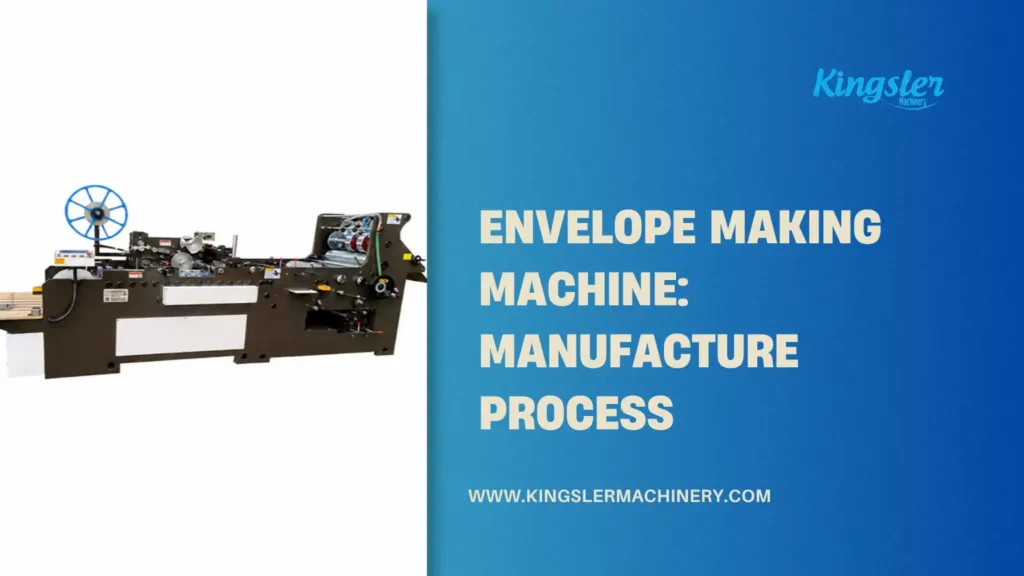
Envelope manufacturing is an important segment of the paper converting industry. Factories around the world produce billions of envelopes each year for offices, banks, and mailing services. Envelope making machine manufacture relies on automated cutting, folding, gluing, and shaping processes, turning flat paper sheets into finished envelopes at high speed. Different machine types are used based on production scale and envelope design, since a small business has very different needs than a large industrial plant. Machine selection impacts speed, precision, and product quality, making it one of the most important decisions a manufacturer will make.
This guide explains how envelope making machine manufacture works, what types are available, and how to choose the right one for your production needs. Whether you run a small print shop or manage a large industrial facility, understanding these machines, including the various envelope making machine types on the market, helps you invest with confidence.
What Is an Envelope Making Machine?
An envelope making machine is industrial equipment used to produce paper envelopes through processes like die cutting, folding, gluing, and shaping. This equipment plays a central role in the paper converting industry, where raw paper sheets become finished products ready for use. These machines produce envelopes of different sizes, from small coin envelopes to large mailing envelopes used for documents and packages. As a paper envelope production machine, it automates cutting and folding, removing the need for manual labor at each step of production.
This automation improves production efficiency, allowing manufacturers to meet large orders without slowing down quality control. Buyers researching envelope making machine manufacture should understand that machine capability varies widely, so matching the machine to actual production needs matters more than choosing the most advanced option available. A well-matched machine reduces downtime and keeps operating costs predictable over the long run.
Envelope Making Machine Manufacturing Process
Manufacturing an envelope involves several connected stages that transform paper into a finished product. Understanding each stage helps buyers evaluate machine performance and production output as part of the broader envelope manufacturing machine process, and it’s foundational knowledge for anyone new to envelope making machine manufacture.
Process Overview
The envelope manufacturing machine process follows a consistent sequence across most machine types. Here is how paper moves through each stage of production.
- Paper feeding starts the process by loading sheets into the machine smoothly.
- Die cutting shapes each sheet into the exact envelope outline needed.
- The folding system bends the cut paper into the envelope’s final structure.
- Gluing application seals the edges together to hold the shape firmly.
- Pressing and sealing strengthens the bond between glued surfaces for durability.
- Final cutting and stacking prepares finished envelopes for packaging and shipment.
This sequence repeats continuously on automated lines, allowing factories to produce thousands of envelopes per hour, which is exactly what makes modern envelope making machine manufacture so efficient at scale.
Key Functions
Beyond the basic production sequence, envelope machines rely on a few core functions to maintain quality. These functions determine how well an envelope cutting and folding machine performs under continuous use.
- Die cutting handles shape formation, giving each envelope a precise and consistent outline.
- A precision folding system keeps every envelope uniform in size and structure.
- Automatic glue application ensures consistent sealing without wasting adhesive material.
- High-speed output production allows factories to meet large order volumes efficiently.
Together, these functions determine how reliable and efficient a machine will be over time, and they explain why quality envelope making machine manufacture depends on more than raw speed alone.
Types of Envelope Making Machines
Manufacturers choose between several envelope making machine types depending on their production volume and design requirements. Each type serves a different segment of the market, from small workshops to large industrial operations.
Automatic Envelope Making Machine
An automatic envelope making machine performs all steps, including feeding, cutting, folding, and gluing, with minimal human intervention. This machine type suits businesses that need consistent, large-scale output.
- High-speed production allows factories to complete large orders in less time.
- A fully automated system reduces the need for constant manual supervision.
- Large factories rely on this machine type to meet high-volume demand.
An automatic envelope making machine represents the top tier of envelope production technology for high-output manufacturers, and it’s often the centerpiece of large-scale envelope making machine manufacture operations.
Semi-Automatic Envelope Machine
Semi-automatic machines require partial manual feeding while automating cutting and folding operations. This option balances cost and output for growing businesses.
- A moderate investment makes this machine accessible to mid-sized manufacturers.
- Flexible production allows operators to adjust settings for different envelope styles.
- Medium businesses find this machine type suitable for steady, manageable output.
This machine type gives smaller manufacturers a practical path toward higher production
without a major capital investment, and it remains one of the most common envelope-making machine types chosen by growing print shops.
Die Cutting Envelope Machine
Die-cutting machines are used to cut paper sheets into precise envelope shapes before folding and gluing. As a dedicated envelope cutting and folding machine, this equipment focuses specifically on the cutting stage of production.
- High precision cutting ensures every envelope shape matches the intended design exactly.
- Custom envelope shapes become possible through interchangeable die cutting tools.
- Design variations rely on this machine to maintain accuracy across different envelope
styles.
Die-cutting quality often determines how consistent the rest of the production process turns out, which is why so much attention goes into this stage of envelope making machine manufacture.
Industrial Envelope Production Line
Industrial production lines combine multiple machines for high-volume envelope manufacturing. These systems link feeding, cutting, folding, gluing, and packaging into one continuous process, removing the gaps that occur when machines operate separately. Continuous production keeps output steady throughout a shift, since paper moves directly from one stage to the next without manual handling in between.
The integrated system also reduces errors that can occur when transferring partially finished envelopes between separate machines. High output efficiency makes this setup the standard choice for large manufacturers supplying envelopes to national or international markets. Companies that invest in a full production line often see the fastest return on investment when order volumes remain consistently high throughout the year, which is a major reason large-scale envelope-making machine manufacturers increasingly favor integrated lines over standalone units.
Envelope Manufacturing Process Explained (Die, Cut, Fold, Glue)
Envelope production involves die-cutting paper sheets, folding them into shape, applying glue, and sealing them into finished products. Each stage plays a distinct role in the final quality of the envelope. The die-cutting stage defines the shape, setting the outline that every following step must follow precisely. Folding ensures structure, giving the flat cut paper its three-dimensional envelope form. Glue ensures sealing strength, holding the folded edges together so the envelope can hold its contents securely. Final stacking for packaging completes the envelope manufacturing machine process, organizing finished envelopes for storage or shipment to customers.
Want to see how this process works on a live production line? Reach out to Kingsler Machinery for a demonstration tailored to your product needs.
Applications of Envelope Making Machines
Envelope making machines serve a wide range of industries that depend on paper packaging and mailing products. Here are the most common applications for this equipment.
- Office envelopes support everyday business correspondence and document handling needs.
- Security envelopes protect sensitive documents with tamper-resistant lining and sealing features.
- Mailing envelopes carry letters and small packages through postal and courier services.
- Packaging envelopes hold small retail items that require lightweight, protective wrapping.
- Custom printed envelopes support branding needs for businesses and marketing campaigns.
These applications show why a reliable paper envelope production machine remains essential equipment across so many different industries and why demand for a well-built paper envelope production machine continues to grow alongside e-commerce and mail volume.
Cost of Envelope Making Machines
Machine cost depends on automation level, production speed, and die cutting system complexity. Buyers should understand these cost tiers before comparing suppliers, since pricing across envelope making machine manufacture options can vary significantly. Getting quotes from a few different envelope making machine manufacture suppliers is usually the fastest way to spot a fair price.
- Automatic machines carry a high cost due to their full automation and speed.
- Semi-automatic machines carry a medium cost, balancing investment with manual flexibility.
- Die cutting machines offer a lower cost per unit within a larger production system.
Comparing these cost tiers against expected output helps buyers choose equipment that fits their budget and goals.
Benefits of Envelope Making Machines
Envelope making machines offer clear advantages over manual production methods, particularly for businesses scaling their output. High-speed production allows manufacturers to complete large orders quickly, meeting tight deadlines without sacrificing quality. Consistent quality output ensures that every envelope matches the same size, shape, and seal strength, which matters for professional and branded products. Reduced labor cost comes from automating repetitive tasks that would otherwise require multiple workers throughout a shift.
Custom design flexibility allows manufacturers to switch between envelope styles using interchangeable dies and adjustable settings. Industrial scalability means a business can expand production capacity by adding machines or upgrading to faster models as demand grows. Together, these benefits explain why manufacturers continue to invest in envelope making machine manufacture instead of relying on manual production.
How to Choose the Right Envelope Making Machine
Choose based on production capacity, automation level, envelope design needs, and budget. A few practical factors can guide this decision for most buyers evaluating envelope making machine manufacturer options.
- Business size determines whether a semi-automatic or fully automatic machine makes more sense.
- Output requirement shapes how much speed and capacity your production line actually needs.
- Design complexity affects which die cutting options and folding systems suit your envelopes.
- Budget and ROI considerations help balance upfront investment against long-term production savings.
Weighing these factors together helps buyers avoid overspending on capacity they do not need, and it also clarifies which envelope making machine types genuinely fit the job.
Choose Kingsler Machinery for Envelope Manufacturing Machines
Kingsler Machinery provides high-performance envelope-making machines designed for precision cutting, high-speed production, and industrial efficiency. The company builds advanced die-cutting systems that maintain accuracy across large production runs, helping manufacturers reduce waste and rework. High-speed automation is built into every automatic envelope making machine, allowing factories to meet demanding order volumes without compromising envelope quality. Kingsler also offers custom machine solutions for businesses with specific envelope designs or unusual production requirements, covering nearly every category of envelope making machine types on the market.
Beyond manufacturing, Kingsler provides global export support, helping international buyers install and maintain their equipment after purchase. This ongoing support gives buyers confidence that their investment in envelope making machine manufacture will keep performing well long after installation.
Final Thoughts
Envelope-making machines improve production efficiency by automating tasks that once required significant manual labor. A well-chosen paper envelope production machine is often the single biggest factor in whether that efficiency gain actually materializes on the factory floor. Die cutting is key to accurate envelope design, since it sets the shape that every later stage depends on. Automation level affects cost and output, so buyers must weigh their budget against their production goals.
Proper machine selection ensures long-term profitability by matching equipment capability to actual business needs rather than short-term ambitions. Buyers who take the time to evaluate their production goals before choosing an envelope cutting and folding machine tend to see better returns over the life of the equipment, and a thoughtful approach to envelope making machine manufacture pays off well beyond the initial purchase.
Ready to upgrade your envelope production line? Contact Kingsler Machinery to discuss the right machine for your business.
Recommended Read:
How to Conduct a Remote Factory Audit in China | Factory Verification Services in China | U.S. Import Requirements | Guide on Importing Machinery from China to USA | Best China Mechanical Sourcing Agent | Incense Making Machine Manufacturer Business
Our Products:
Foil Balloon Making Machine China | Confetti Making Machine | Wooden Edge Banding Machine | Secondhand Machinery China
FAQs
What is an envelope-making machine?
An envelope-making machine is industrial equipment that automates cutting, folding, gluing, and shaping paper into finished envelopes. It sits at the center of modern envelope making machine manufacture.
How does envelope die cutting work?
Die cutting uses a shaped blade to cut paper sheets into precise envelope outlines before folding and gluing begins, forming the core of any envelope cutting and folding machine.
What are the types of envelope machines?
Common envelope making machine types include automatic machines, semi-automatic machines, die cutting machines, and full industrial production lines.
Is the automatic envelope machine better?
An automatic envelope making machine suits large factories needing high-speed output, while semi-automatic machines suit smaller businesses with flexible production needs.
What is the envelope production process?
The envelope manufacturing machine process includes paper feeding, die cutting, folding, gluing, pressing, sealing, and final cutting before packaging, and it forms the backbone of nearly all envelope making machine manufacture today.
Get In Touch
We’d love to hear from you! Reach out with your questions or feedback.
- +8618957999107 , +8615867974765
- support@kingslermachinery.com
- 1711, Wuyue No.1 Mansion, Jiangdong Road, Yiwu City, Jinhua, Zhejiang Province