


Blogs
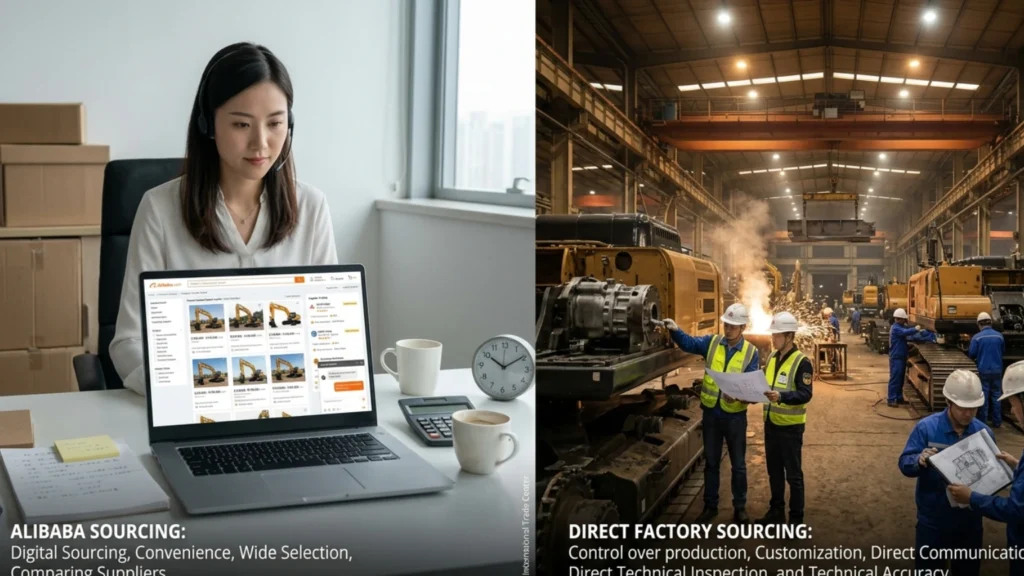
If you are sourcing equipment from China, this question comes up quickly: Should you buy from Alibaba listings or go straight to a factory? For light consumer products, either route can work. For heavy equipment, the choice has a bigger impact on cost, quality control, technical accuracy, and long-term risk.
Most people think Alibaba vs direct factory machinery is only about price. Yet deeper costs hide beneath the surface once changes are needed, parts must be replaced, help arrives late, or machines sit idle. One upfront bargain might lead to bigger bills later on. What seems low today often isn’t when everything adds up down the road. By the time equipment fires up onsite, early savings can vanish completely.
In this guide, we break down Alibaba vs direct factory machinery in practical terms using a real sourcing workflow. You will see where each method works, where it fails, and how buyers reduce risk by combining both approaches. For related sourcing examples, you can review the Kingsler machinery blog section.
Most people bringing machines into their country see Alibaba vs direct factory machinery not as a single best choice but as shifting paths depending on where they are in the purchase journey.
What Is Alibaba Sourcing for Machinery?
Alibaba sourcing for machinery means finding and buying machines through the Alibaba online marketplace. It connects buyers with different suppliers in China, such as factories, trading companies, and resellers all in one place.
Think of it like an online showroom. You can browse machines, compare prices, check specs, and send messages to suppliers without leaving your desk. For example, if you need a packaging machine, you can quickly view many options, ask for quotes, and shortlist suppliers within minutes.
How Alibaba Works
Starting out small? Alibaba links buyers straight to suppliers online. Jump between product posts fast, shoot questions through messages, and get price quotes on demand. Talking directly with seller reps saves trips overseas. Newcomers often begin here; it just flows easier. Reaching out takes minutes, not flights.
Types of Suppliers on Alibaba
One challenge is that Alibaba includes different supplier types in the same search results:
- Actual factories
- Trading companies
- Resellers and mixed-operation businesses
Here’s the thing about Alibaba: spotting the difference between Alibaba machinery suppliers vs manufacturers matters more than you’d think. Picture two listings looking nearly identical, yet one runs factories itself, whereas the other just passes your request along. One builds it. The second doesn’t touch a single machine.
Start by checking who actually owns the operation when looking at Alibaba listings; some are traders pretending to be factories. Real producers usually share clear images of their workshop floor, machines running, and people working. Notice how deeply they answer specific technical queries; shallow replies often signal middlemen.
Ownership documents help tell if it’s a factory or reseller hiding behind equipment shots. Photos matter more than polished descriptions full of vague claims. An Alibaba machinery suppliers vs manufacturers explains processes without hesitation, down to materials and tolerances. Watch how fast details come through – if answers feel recycled, doubt creeps in.
What Is Direct Factory Sourcing?
Buying straight from the maker skips middlemen found on marketplaces. That means talks happen with people who run how things are built, set specs, and decide if quality passes.
How It Works
It usually involves direct communication, technical discussion with engineers, and factory-level negotiation on specifications, lead time, and testing. In a direct setup, Alibaba vs manufacturer China becomes a question of convenience versus control.
At the project level, Alibaba vs manufacturer China also affects how quickly you can confirm engineering changes and quality accountability before shipment.
Key Differences: Alibaba vs Direct Factory Machinery
| Factor | Alibaba | Direct Factory |
| Access | Easy to start online | Requires sourcing and verification effort |
| Pricing | Medium, often layered | Usually lower for larger orders |
| Transparency | Mixed, depends on listing accuracy | Higher if the factory is verified |
| Communication | Platform-based sales communication | Directly with the production or engineering team |
| Risk | Medium | Depends on verification quality |
Not sure which option fits your machinery needs? Get expert guidance before choosing your supplier. Kingsler Machinery shares practical sourcing information through its company background and sourcing approach.
If your team is still evaluating Alibaba vs direct factory machinery, document your quote assumptions first so supplier comparisons stay accurate.
Advantages of Buying Machinery from Alibaba
The main advantages are speed, choice, and easy entry for new buyers. You can quickly explore the market, compare suppliers, and start with small orders before scaling.
Easy Supplier Access
You can reach many suppliers quickly with minimal setup. For early-stage market research, this is efficient.
Quick Comparison
You can compare specs, photos, lead times, and quote ranges in one place. This makes the first round of filtering faster.
Lower Entry Barrier
For smaller orders or trial sourcing, Alibaba can be easier to start with. This is one reason buyers explore buying machinery from Alibaba vs factory before committing to a long-term supply model.
A practical first step is to buy machinery from Alibaba vs factory for initial benchmarking, then validate cost and risk before large commitments.
Limitations of Alibaba for Heavy Machinery
The main limitations are lower transparency, hidden pricing layers, and higher sourcing risk—especially if suppliers are not properly verified on Alibaba. While it is great for quick research, it can become risky for complex or high-value machinery.
Supplier Transparency Issues
Listing quality varies. Profile badges and polished pages do not always confirm real production capability, which is why buyers often cross-check trade guidance from the World Trade Organization when building supplier due diligence processes.
Higher Pricing Layers
When middle layers are involved, pricing can include extra margins that are not obvious during early negotiation.
Risk of Trading Companies
In machinery sourcing, many buyers rush into decisions and later face delays, quality issues, or hidden costs, which is why it is important to understand how to avoid bad machine sourcing in China so you can stay away from common traps.
The debate around direct factory vs trading company China matters most when technical requirements are strict and after-sales support is critical. Before paying deposits, clarify whether you are in a direct factory vs trading company China scenario, because responsibility for defects differs significantly.
Practical note: One of the biggest pros and cons Alibaba sourcing discussions is speed versus control. Alibaba is fast for discovery. It is less reliable if you skip deeper verification.
When teams debate the pros and cons Alibaba sourcing, they usually find that speed is easy to get, while transparency must be built through verification.
Advantages of Direct Factory Sourcing
The main advantages are better pricing, stronger customization, and clear communication because you deal directly with the manufacturer instead of middlemen.
Better Pricing
For larger orders, direct factory sourcing often improves pricing by reducing intermediary layers.
Customization Options
Factory teams can usually handle technical customization more effectively, including voltage standards, tooling adjustments, and line integration details. Buyers who need practical machinery references can also check Kingsler’s product and machinery pages while comparing options.
For a broader manufacturing context, capability-building frameworks from the United Nations Industrial Development Organization are also useful when evaluating factory maturity.
Direct Communication
You can align directly with production and engineering teams, which reduces miscommunication and shortens technical feedback loops.
Challenges of Direct Factory Sourcing
The main challenges are finding reliable factories, handling communication issues, and doing proper verification before buying.
Harder to Find Reliable Factories
Finding real, capable factories takes time and verification effort. Not every supplier presenting as a factory is a true manufacturer.
Language and Communication Barriers
Technical sourcing can get complicated when specification details are unclear or translated poorly.
Verification Required
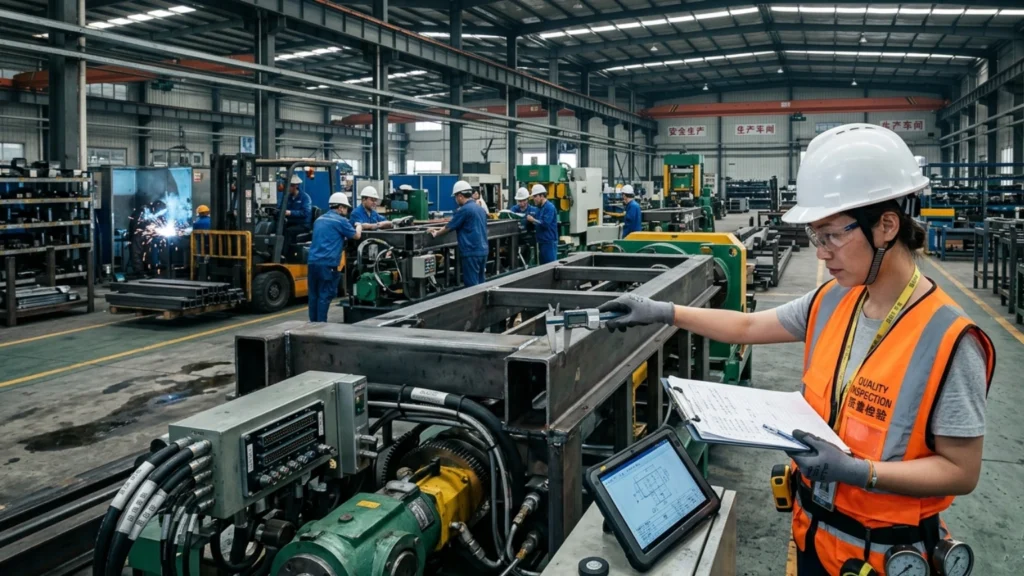
Factory audit, capability check, and inspection are essential. Without this, direct sourcing can still carry a high risk.
This is another point where Alibaba vs manufacturer China should be evaluated with real documents, not only listing quality or quote speed.
Which Option Is Better for Heavy Machinery?
For decision-makers, China machinery sourcing Alibaba vs factory should be evaluated based on order size, customization depth, and verification resources.
When Alibaba Makes Sense
- Small orders
- Initial supplier research
- Quick market scanning and early quote benchmarking
When Direct Factory Is Better
- Large orders
- Custom machinery projects
- Long-term supply planning and stable quality requirements
Best Strategy: Combine Both
Hybrid wins most times when it comes to picking a path. Start on Alibaba – find suppliers fast and stack up options early. Then shift gears: verify factories yourself, talk straight with production teams before deciding. So, really, choosing China machinery sourcing Alibaba vs factory work? That kind of split doesn’t fit anymore.
Many sourcing teams run a phased model for China machinery sourcing Alibaba vs factory: marketplace discovery first, then direct factory due diligence and negotiation.
Hidden Risks Buyers Should Know
- Fake factory listings
- Misleading product specifications
- Quality inconsistency between sample and mass production
- Pricing traps involving optional parts and after-sales terms
How to Verify a Machinery Supplier in China
The best way is to check the factory step by step. Don’t rely on claims; rely on proof.
- Conduct a factory audit and ownership verification
- Check production capability against your machinery specs
- Review certifications and compliance documents
- Arrange an on-site quality inspection before shipment
If you are not sure where to start, it helps to follow a proven process. For example, this guide on how to verify a factory in China explains the exact steps buyers use to confirm real suppliers before placing an order.
During verification, map Alibaba machinery suppliers vs manufacturers against business licenses and workshop evidence so you can confirm who really produces your equipment. One common mistake buyers make is relying on only one inspection method, but in reality, understanding full inspection vs spot check helps you choose the right level of quality control based on your order size and risk.
When travel is not possible, using a remote factory audit in China becomes a practical way to verify suppliers from a distance. For broader context on industrial trade and manufacturing standards, buyers should use reliable public frameworks and supplier-side evidence together, rather than relying on either one alone.
Role of a Machinery Sourcing Agent
Most of the time, a sourcing agent smooths things out if buyers are unfamiliar with local conditions. What actually happens is they locate genuine manufacturers, match pricing details, and manage quality checks, while making sure technical messages stay understandable.
Most times at Kingsler Machinery, this position handles tasks like checking suppliers and organizing workflows, one task after another, risk oversight included. Project needs? The team answers questions about those, too.
Skip the guesswork. Work with experts who can connect you directly with verified machinery manufacturers in China. Contact us today to get started.
Common Mistakes Buyers Make
The biggest mistakes come from rushing decisions and trusting surface-level information instead of doing proper checks.
- Trusting Alibaba listings without verification
- Choosing a supplier based only on the headline price
- Skipping factory and inspection checks
- Ignoring detailed technical specifications and tolerance limits
A frequent mistake in direct factory vs trading company China decisions is assuming that faster replies automatically mean better supplier capability.
Best Practices for Machinery Sourcing
Sourcing industrial machinery, whether through Alibaba or directly from a factory requires more than just finding the lowest price. A structured approach helps you avoid costly mistakes, verify supplier credibility, and ensure long-term equipment reliability. Keep these core practices in mind throughout your procurement process:
- Compare multiple suppliers, not just first-page listings
- Verify factory status and real production capability
- Inspect machinery before shipment
- Focus on total long-term value, not only initial quote
Good planning around buy machinery from Alibaba vs factory should include quote normalization, technical checklist alignment, and post-sale support evaluation.
The most useful way to review pros and cons Alibaba sourcing is to score each supplier on transparency, technical fit, and quality control response speed. Policy notes from OECD trade resources can also help teams build stronger sourcing checklists.
In complex equipment projects, the pros and cons Alibaba sourcing conversations should be tied to inspection plans, not only quote speed.
When evaluating Alibaba vs direct factory machinery, experienced buyers usually prioritize clarity over speed. Clear specs, verified capability, and structured risk checks consistently outperform fast but uncertain sourcing decisions.
Most seasoned purchasers value clear information more than quick results when comparing Alibaba vs direct factory machinery. Specifications that leave no room for guessing, proven performance records, and organized assessments of potential issues tend to deliver better outcomes than rushed choices filled with unknown decisions.
Final Takeaway
Out of nowhere, Alibaba pops up as a go-to for quick entry into markets with ease. Moving straight to factories can mean tighter oversight, sometimes even lower costs when it comes to big equipment. Success tends to land where buyers mix sharp comparisons, solid checks, and clear processes in how they source.
When procurement plans take shape, choices between Alibaba vs direct factory machinery need attention early on. At the request-for-quote moment, one path opens while another closes quietly. Contract talks shift the ground – details tighten, risks show themselves differently. Before shipping begins, a final check reminds everyone what was overlooked before.
If you treat Alibaba vs direct factory machinery as a strategic sourcing decision rather than just a quoting exercise, you lower risk and improve long-term supply reliability. In long-term procurement, China machinery sourcing Alibaba vs factory works best when buyers compare both channels but finalize only after verification.
At the execution level, Alibaba vs direct factory machinery works best when technical validation and supplier verification happen before payment milestones.
Ready to source heavy machinery from China with confidence? Contact our team for a tailored sourcing strategy based on your order size, technical requirements, and risk profile.
Recommended Read:
How to Conduct a Remote Factory Audit in China | Factory Verification Services in China | U.S. Import Requirements | Guide on Importing Machinery from China to USA | Best China Mechanical Sourcing Agent | Guide to Buying Machinery from China | Quality Control Tips | Streamline Machinery Packing | Sourcing Heavy Machinery from China | China Mechanical Sourcing Agent
Our Products:
Foil Balloon Making Machine China | Secondhand Foil Balloon Making Machine | Confetti Making Machine | Incense Making Machine | Envelope Making Machine | Wooden Edge Banding Machine | Secondhand Machinery China | Automatic Table Cover Making Machine | Plastic Crushing Machine | 3 Layer ABA Film Blowing Machine | Blown Film Extrusion Machine | Rice Milling Machine | Macaroni Making Machine
FAQs
Is Alibaba reliable for machinery?
Alibaba is useful for discovery and early comparison, but reliability depends on supplier verification. For heavy machinery, platform screening should be followed by deeper factory checks. To reduce risk, evaluate Alibaba machinery suppliers vs manufacturers with the same verification checklist before shortlisting.
Is it better to buy directly from the factory in China?
For larger or customized machinery orders, direct factory sourcing is often better because pricing, communication, and technical alignment are usually stronger. Many teams compare buy machinery from Alibaba vs factory first, then move directly once the production capability is confirmed.
How to find real factories in China?
Use multi-step verification: business records, factory audits, production capability checks, and on-site inspection before shipment.
What is the difference between factory and trading company?
A factory controls production directly. A trading company usually coordinates orders through other manufacturers and may add communication and pricing layers. This is exactly why direct factory vs trading company China should be clarified before signing contracts.
How to reduce risk when sourcing machinery from China?
Compare multiple suppliers, verify factory identity, confirm technical specs in writing, and inspect before shipment release. A structured process consistently reduces avoidable surprises. In practical terms, review Alibaba vs manufacturer China with a fixed checklist and do not release payment until documents and inspections are complete.