


Blogs
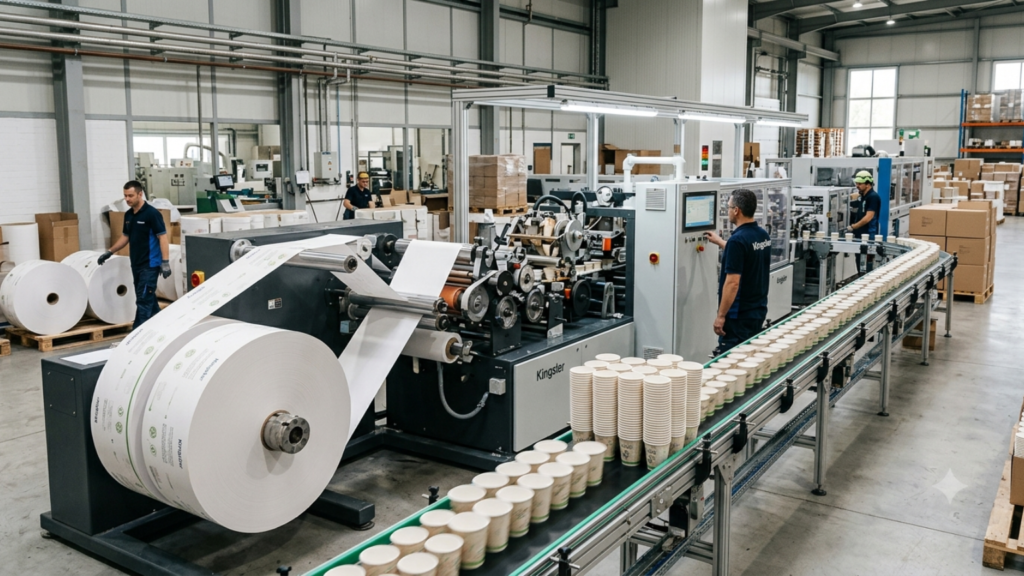
Paper cup demand is rising globally, driven by the rapid expansion of cafés and quick service restaurants and a growing shift away from plastic packaging. For entrepreneurs seeking a scalable manufacturing opportunity with relatively low barriers to entry, the industry presents a compelling case. But profitability is not automatic; it depends on machine efficiency, raw material costs, production scale, and how well you position your product in the market. Understanding paper cup manufacturing profitability in 2026 is the first step toward making an informed investment decision.
Paper cup manufacturing is still profitable in 2026, with average profit margins ranging from 25% to 50%, depending on production scale, automation level, and market demand. The combination of consistent global demand, low per-unit production cost, and expanding end-user markets makes this one of the more stable manufacturing segments for new and established investors alike. Is paper cup manufacturing profitable in 2026? The data strongly suggests yes, provided you enter with the right machinery and cost structure.
Why Paper Cup Manufacturing is Still Profitable
Several structural market advantages support paper cup manufacturing profitability:
- High and consistent global demand for disposable cups across foodservice, hospitality, and retail
- Rapid growth of cafés, takeaway culture, and food delivery platforms is increasing per-unit consumption
- Government bans and regulations on single-use plastic are driving buyers toward paper alternatives
- Low per-unit production cost that allows competitive pricing while maintaining healthy margins
Paper Cup Industry Growth in 2026
The paper cup industry is growing steadily in 2026 due to rising food delivery services, sustainability trends, and global demand for eco-friendly packaging. This growth is not limited to developed markets; emerging economies across Asia, Africa, and Latin America are seeing accelerated adoption of disposable paper cups as urbanization and foodservice culture expand. For investors evaluating paper cup manufacturing profitability, this trajectory represents a sustained demand base rather than a short-term spike.
Key Growth Drivers
Several converging trends are fueling industry expansion in 2026:
- QSR (Quick Service Restaurant) chains are expanding globally and driving bulk cup procurement
- Eco-friendly packaging regulations are pushing businesses away from plastic toward PE and PLA-coated paper cups
- Urban coffee culture is continuing to grow, particularly in Asia and the Middle East
- Export demand from emerging markets is creating new revenue channels for manufacturers
Profit Margin in Paper Cup Manufacturing
Paper cup manufacturing profit margins typically range from 25% to 50%, with higher margins achieved through branded and custom-printed cups. The paper cup business profit margin varies significantly based on the product type you manufacture, the volume you produce, and whether you sell commodity cups or value-added custom products. Manufacturers who invest in printing capabilities consistently outperform those producing plain, unbranded cups.
Profit Breakdown
Margins shift considerably depending on product positioning:
- Low-end plain cups: 20–30% margin, high volume, price-sensitive market
- Standard cups: 25–40% margin, suitable for foodservice and institutional buyers
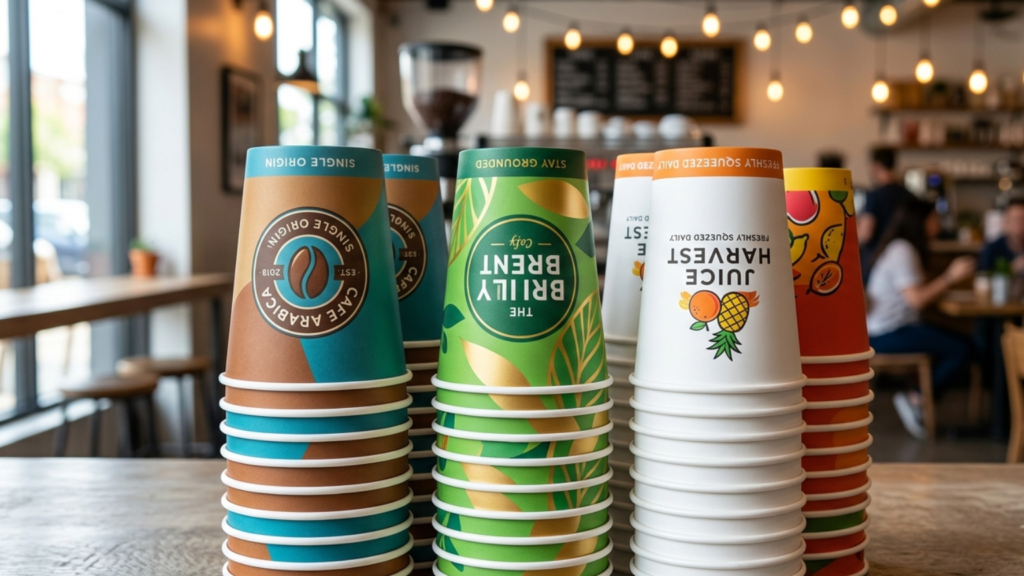
- Custom printed and branded cups: 40–50%+ margin, lower volume but significantly higher value per unit
Cost Structure of Paper Cup Manufacturing
Understanding paper cup production cost analysis is essential before entering the business. Costs fall into two main categories, raw materials and operating expenses, and managing both efficiently is what separates profitable operations from marginal ones.
Raw Material Costs
Raw materials typically account for 50–60% of total production costs. The primary inputs are paper rolls (PE or PLA-coated board), coating materials that determine whether the cup is heat-resistant or compostable, and ink and printing materials for branded cup production. Paper roll quality directly affects cup consistency and waste rate, making supplier selection a critical profitability lever.
Operating Costs
Beyond raw materials, operating costs include labor (which decreases significantly with automation), electricity consumption (which varies based on machine type and production speed), routine machine maintenance, and packaging and logistics costs for finished goods. Manufacturers who work with efficient machinery, such as the automated lines offered by Kingsler Machinery, typically see lower per-unit operating costs at scale, which directly improves the paper cup business profit margin.
Startup Investment for Paper Cup Business
A paper cup manufacturing business can be started with a modest investment for small-scale machines or higher capital for fully automated production lines. The entry point is accessible compared to many other manufacturing sectors, which is one reason paper cup manufacturing profitability attracts a wide range of investors, from small entrepreneurs to established industrial operators. Disposable cup manufacturing business profit potential scales directly with the level of automation and production capacity you invest in.
Investment Range
Capital requirements vary widely based on production scale:
- Small scale (manual or semi-auto, 1–3 machines): $8,000 – $25,000
- Medium scale (semi-automatic to automatic lines): $45,000 – $80,000
- Industrial setup (fully automated high-speed production): $100,000+
Looking for the right paper cup machine for your production goals? Contact Kingsler Machinery for a free consultation and equipment recommendation.
Factors That Affect Profitability
Paper cup manufacturing profitability is not fixed; it shifts based on how well you manage the key variables in your operation:
- Machine efficiency — faster, more automated machines produce more cups per hour at lower labor cost, directly improving paper cup machine ROI
- Raw material pricing — fluctuations in paper pulp and PE/PLA coating costs affect margins; long-term supplier contracts can stabilize costs
- Production scale — higher volume spreads fixed costs across more units, reducing cost per cup and increasing margin
- Market demand — local, regional, and export market conditions determine pricing power and order volume
Challenges in Paper Cup Manufacturing
Every manufacturing business carries operational challenges, and paper cup production is no exception:
- Price competition in local markets can compress margins, particularly for plain, unbranded cups, where differentiation is limited
- Raw material cost fluctuations, especially for paper pulp and PE coating, can erode profitability if not managed through supplier agreements
- Machine maintenance downtime disrupts production schedules and increases per-unit cost during low-output periods
- Quality consistency issues, including cup sealing defects, coating irregularities, and dimensional variations, can lead to customer rejections and reputational damage
Choosing reliable machinery from established manufacturers like Kingsler Machinery reduces the frequency and severity of maintenance and quality issues, which is a key factor in sustaining long-term paper cup manufacturing profitability.
How to Increase Profit in 2026
Improving paper cup manufacturing profitability in 2026 requires deliberate choices across product strategy, operations, and market development:
- Focus on custom printing — branded and custom-printed cups command 40–50%+ margins versus 20–30% for plain cups; investing in printing capability is one of the highest-ROI decisions a manufacturer can make
- Improve production efficiency — upgrading to higher-speed automated machinery reduces labor cost per unit and increases daily output, directly improving paper cup machine ROI
- Target export markets — domestic price competition is often intense; exporting to markets with supply gaps or higher price tolerance significantly improves revenue per unit
- Reduce material waste — optimizing paper roll usage and minimizing defect rates lowers raw material cost per cup and improves overall margin
Role of Kingsler Machinery in Profitability
Machine selection directly impacts profitability because higher-speed, automated paper cup machines reduce labor costs and increase production output. The paper cup machine ROI you achieve is largely determined by the machine you start with. A manual machine may have a lower upfront cost, but the per-unit labor cost and output limitations significantly restrict how profitable the operation can become at scale. This is a core insight in any serious paper cup production cost analysis.
Key Machine Types
- Manual machines — lowest investment, highest labor dependency, suitable for very small-scale or test operations
- Semi-automatic machines — balance of cost and output, appropriate for small to medium production volumes
- Fully automatic machines — highest output, lowest per-unit labor cost, best long-term paper cup machine ROI, recommended for serious commercial operations
Kingsler Machinery specializes in semi-automatic and fully automatic paper cup production lines designed to maximize output consistency and minimize downtime, two of the most important variables in sustaining paper cup manufacturing profitability over the long term.
Is It a Good Business in 2026?
Yes, paper cup manufacturing is a good business in 2026 due to rising global demand, strong profit margins, and an increasing shift toward sustainable packaging. The combination of plastic bans, café culture expansion, and food delivery growth creates a demand environment that consistently supports disposable cup manufacturing business profit. For investors who choose the right machinery, manage raw material costs effectively, and position their product beyond commodity-plain cups, paper cup manufacturing profitability in 2026 remains strong. Is paper cup manufacturing profitable in 2026? For well-prepared operators, the answer is clearly yes.
Final Thought
Paper cup manufacturing remains one of the more accessible and reliably profitable manufacturing segments in 2026. Margins range from 25% to 50%, depending on product type and production scale, with automation playing the most significant role in determining long-term efficiency and paper cup machine ROI. Manufacturers who invest in quality machinery, including the production lines available through Kingsler Machinery, and who pursue value-added products like custom-printed cups, will consistently outperform those competing purely on price. Whether you are entering the business for the first time or scaling an existing operation, paper cup manufacturing profitability in 2026 rewards preparation, the right equipment, and a clear market strategy.
Ready to start or scale your paper cup manufacturing business? Get in touch with Kingsler Machinery to explore the right production line for your investment level and output goals.
Recommended Read: Products Packaging Solution | Industrial Machinery Inspection China | China 140th Canton Fair Phase 1
Our Top Products
Roll Case Cake Cup Machine | Automatic Special Shape Plate Machine | Cake Tray Forming Machine | Automatic Plum Cake Cup Machine | Tulip Cup Machine | Muffin Cup Making Machine | Paper Cake Cup Making Machine | Paper Plate Making Machine
FAQs
Is paper cup manufacturing profitable in 2026?
Yes. Paper cup manufacturing profitability in 2026 is supported by strong global demand, plastic replacement trends, and margins of 25–50% depending on scale and product type. Is paper cup manufacturing profitable in 2026 for small investors? Yes, even small-scale setups can achieve solid returns with the right cost management.
What is the profit margin of paper cups?
The paper cup business profit margin ranges from 20–30% for plain cups to 40–50%+ for custom-printed and branded cups. Scale and automation level significantly influence where in that range your operation lands.
How much investment is needed for a paper cup business?
Investment ranges from $8,000–$25,000 for small-scale setups to $100,000+ for fully automated industrial lines. A thorough paper cup production cost analysis before purchasing machinery helps ensure your investment matches your target output and market.
What machines are required for paper cup production?
The core requirement is a paper cup forming machine, available in manual, semi-automatic, and fully automatic configurations. The choice directly determines your paper cup machine ROI and production capacity. Additional equipment includes raw material handling systems, quality inspection tools, and packaging lines.
Is the paper cup industry growing?
Yes. The disposable cup manufacturing business profit opportunity is expanding in 2026, driven by QSR growth, eco-packaging regulations, and rising urban food delivery culture across global markets.