


Blogs
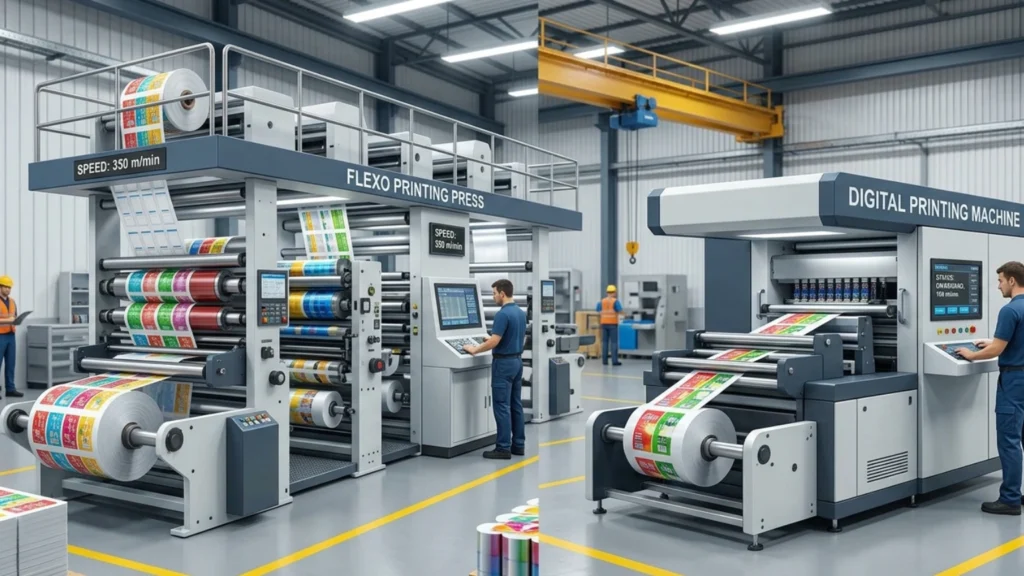
Printing technology sits at the heart of every packaging operation. Whether you are running a large manufacturing facility or launching a custom packaging brand, the machine you choose defines your production speed, cost structure, and output quality. For anyone evaluating a flexo vs digital printing machine today, the decision carries long-term consequences that go far beyond the initial purchase price. This guide gives you everything you need to make that call with confidence, especially if you are buying machinery from China for your packaging business.
Two technologies dominate the industry: flexographic and digital printing. The flexo vs digital printing machine debate is one of the most important decisions a packaging buyer will make. Understanding each option’s capabilities, costs, and ideal applications is the clearest path to making the right investment for your business model, order volume, and growth plan. This guide gives you everything you need to make that call with confidence. Whether you are a first-time buyer or upgrading an existing production line, the flexo vs digital printing machine comparison covered here applies directly to your situation.
What Is a Flexo Printing Machine?
A flexographic printing machine uses flexible relief plates and fast-drying inks to print high-volume packaging materials efficiently at industrial speed.
How Flexo Printing Works
Flexographic printing uses flexible relief plates and fast-drying inks to print packaging materials at industrial speed, typically made from photopolymer or rubber, onto the substrate as it moves through the press on a continuous roll. The process runs at extremely high speed with minimal interruption, making it one of the most efficient packaging printing machine types available for mass production.
- Plate-based printing system requiring pre-made plates for each design
- Continuous roll-to-roll production with minimal stoppages
- High-speed output measured in hundreds of meters per minute
- Suitable for a wide range of substrates, including film, paper, and board
Common Applications
Flexo printing machines are the backbone of industrial packaging production globally. Common applications include packaging films, paper bags, labels, corrugated boxes, flexible pouches, and food-grade packaging. Any product requiring consistent, high-volume print output at low per-unit cost is a natural fit for flexo. This is the core strength that makes the flexo vs digital printing machine debate relevant for high-volume manufacturers.
What Is a Digital Printing Machine?
A digital printing machine prints directly from digital files without plates, making it ideal for short runs, customized packaging, and fast design turnaround.
How Digital Printing Works
Digital printing eliminates the plate-making stage entirely. Designs go directly from file to print, allowing for immediate production start and easy design changes between runs. This is one of the core digital printing machine benefits packaging businesses with variable SKUs or seasonal designs rely on.
- Direct file-to-print process with no plate preparation required
- No plates means no plate costs and no setup delays between design changes
- Variable data printing allows unique codes, names, or designs on every single unit
- Ideal for on-demand production without minimum order requirements
Common Applications
Digital printing machines serve custom packaging brands, small-batch production, prototype development, short-run label printing, and personalized packaging campaigns. For startups and brands testing new SKUs, digital printing is one of the most practical packaging printing machine types available. Buyers exploring the flexo vs digital printing machine options for the first time will find digital the easier entry point.
Key Differences Between Flexo vs Digital Printing Machine Options
When comparing a flexo vs digital printing machine side by side, every major production variable shifts. This table captures the core differences buyers need to understand before making a decision.
| Factor | Flexo Printing | Digital Printing |
| Printing Method | Plate-based | Direct digital |
| Production Volume | High-volume | Low to medium volume |
| Setup Time | Longer | Faster |
| Design Flexibility | Lower | High |
| Variable Printing | Limited | Excellent |
| Long-Term ROI | Strong for bulk | Strong for short runs |
| Packaging Efficiency | Industrial scale | Flexible production |
| Machine Investment | Higher | Lower |
This table is the foundation of any flexo vs digital printing cost comparison. The right choice is rarely about which machine is objectively better; it is about which machine fits your production model.
Printing Speed Comparison
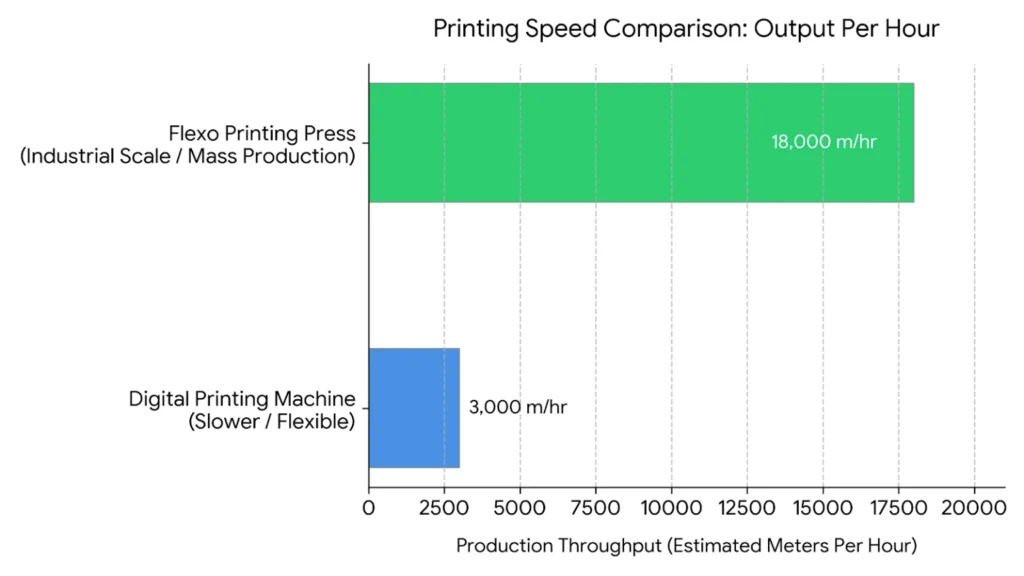
Flexo printing machines are significantly faster than digital printing machines, making them ideal for large-scale packaging production where output per hour determines profitability.
Flexo Printing Speed Advantages
Speed is one of the primary flexo printing machine advantages that drives adoption in large manufacturing facilities. In any flexo vs digital printing machine evaluation focused on throughput, flexo wins decisively at volume.
- Can print hundreds of meters per minute on a single continuous run
- Supports nonstop roll-to-roll production with minimal downtime between reels
- Handles large production lines efficiently with consistent quality across long runs
- Reduces per-unit cost significantly during extended print runs
Real-World Example
A snack packaging factory producing 500,000 chip packets monthly typically prefers flexo printing because high-speed continuous production lowers long-term operational costs far below what digital can achieve at that volume. This is a core flexo printing machine advantage that large manufacturers depend on daily.
Digital Printing Speed Limitations
Digital printing trades raw speed for flexibility. For short-run packaging, this trade-off makes sense. For mass production, it does not.
- Slower output per hour compared to flexo for large-volume jobs
- Better suited for short-run packaging where fast setup offsets slower print speed
- Frequent design changes are easier to manage with no plate swap required
Production Downtime Comparison
| Flexo | Digital | |
| Setup Time | Longer plate preparation required | “Minimal file-ready” means “print-ready.” |
| Continuous Production | Faster, with minimal interruption once running | Slower lower throughput during large runs |
| Design Change | Slower new plates required | Fast change design between jobs instantly |
Cost Comparison: Flexo vs Digital Printing Machine
Flexo printing is more cost-effective for large production runs, while digital printing is more economical for small or customized orders, and any serious flexo vs digital printing cost comparison must account for run length before drawing conclusions.
| Cost Factor | Flexo Printing | Digital Printing |
| Machine Purchase Price | Higher | Lower |
| Plate/Setup Cost Per Job | High | None |
| Cost Per Unit at High Volume | Very low | Higher |
| Cost Per Unit at Low Volume | High | Low |
| Ink Consumption | High volume, lower per-unit | Moderate |
| Maintenance Cost | Higher | Lower |
| Operator Skill Required | High | Moderate |
Hidden Costs Buyers Often Ignore
A flexo vs digital printing cost comparison that focuses only on machine price misses the real cost picture. Watch out for:
- Prepress setup expenses: plate-making for flexo adds cost to every new design
- Print cylinder replacement: flexo cylinders wear over time and require periodic replacement
- Machine maintenance downtime: flexo presses require more maintenance than digital systems
- Ink consumption: flexo uses higher ink volumes; digital ink costs vary by coverage
- Operator training costs: flexo requires specialized operators; digital has a lower learning curve
Long-Term ROI Analysis
Flexo ROI is strongest for businesses with recurring packaging designs, predictable high-volume orders, and standardized SKUs. Once setup costs are absorbed across millions of units, flexo printing machine advantages translate directly into profit margin.
Digital ROI is strongest for startups, custom packaging brands, and businesses with frequent design changes. Lower upfront costs and zero plate expenses reduce inventory waste and allow faster responses to market changes, core digital printing machine benefits packaging entrepreneurs depend on.
Print Quality Comparison
Both flexo and digital printing deliver high-quality results, but they excel in different areas. Flexo leads in consistent large-scale output, while digital leads in fine detail and color complexity. Quality is a key dimension of any flexo vs digital printing machine evaluation and should never be overlooked in favor of cost alone.
Flexo Printing Quality
Flexo printing delivers reliable, consistent quality across extremely long runs. Once the press is set up and calibrated, color consistency from the first unit to the millionth is one of the strongest flexo printing machine advantages in industrial packaging.
- Consistent color reproduction across large production runs
- Slight limitation in reproducing very fine detail or complex gradients
- Excellent for spot colors, bold graphics, and solid fills
- Quality is highly repeatable once press settings are confirmed
Digital Printing Quality
Digital printing excels where flexo has limitations. Fine detail, photographic imagery, and complex color gradients are where digital shines. This is one of the key digital printing machine benefits that packaging designers value most.
- High-resolution output suitable for complex designs and photographic images
- No dot gain from plates means sharper fine lines and gradients
- Ideal for intricate label designs, luxury packaging, and premium brand presentation
- Consistent quality regardless of run length, from one unit to ten thousand
When to Choose a Flexo Printing Machine
Choose a flexo printing machine when you need high-speed, large-volume, and cost-efficient packaging production with consistent output across standardized designs.
For buyers working through the flexo vs digital printing machine decision, the choice becomes clear when volume is the dominant variable. Understanding flexographic printing vs digital printing at this decision point is straightforward: if your business runs long production cycles with stable designs and needs the lowest possible per-unit cost, flexo is the right machine. Among all packaging printing machine types, flexo delivers the best economics at scale.
Best Use Cases:
- Mass packaging production for food, beverage, and consumer goods
- Long production runs with minimal design variation
- Standardized designs repeated across large order volumes
- Industrial-scale operations where speed and cost per unit are primary KPIs
Which Printing Machine Is Best for Your Business Type?
Flexographic printing vs digital printing decisions are rarely one-size-fits-all. Your business model, order volume, and design frequency determine which side of the flexo vs digital printing machine comparison fits you best. Startups should review equipment planning guidance from the U.S. Small Business Administration before investing in packaging machinery.
Small Packaging Businesses
Best Choice: Digital Printing
Digital printing machine benefits packaging small businesses in ways flexo simply cannot at low volumes. Lower startup investment, no plate costs, and easy design updates make digital the practical choice when order sizes are modest and SKU variety is high.
Large Manufacturing Factories
Best Choice: Flexo Printing
For large factories running continuous packaging lines, the flexo printing machine advantages are decisive. Faster production speed, lower long-term cost per unit, and compatibility with industrial-scale operations make flexo the clear choice. Flexographic printing vs digital printing at this scale is not a close comparison. Flexo wins on every production metric that matters.
Label Printing Companies
Best Choice: Depends on Order Volume
Label printers sit at the intersection of both packaging printing machine types. Flexo is the right call for bulk label production with stable designs. Digital is better for customized labels, short runs, and variable data requirements. Many label companies operate both machines as part of a hybrid setup.
Startups and Custom Brands
Best Choice: Digital Printing
Digital printing machine benefits packaging startups through SKU customization, faster market testing, lower minimum order requirements, and a better fit for seasonal product lines. In any flexo vs digital printing machine evaluation at low volumes, digital economics always comes out ahead. Before making a final investment, it is important to choose a machinery manufacturer in China with proven experience in packaging and printing equipment.
When to Choose a Digital Printing Machine
Choose a digital printing machine when you need short runs, customization, fast design changes, and lower upfront investment without sacrificing quality.
Among packaging printing machine types, digital is the most accessible entry point for new businesses. Flexographic printing vs digital printing for startups almost always resolves in digital’s favor due to cost structure and flexibility. The digital printing machine benefits packaging businesses by requiring no plates, offering instant setup, and allowing variable printing, which are most valuable at lower volumes and higher design complexity.
Best Use Cases:
- Small businesses and independent packaging brands
- Custom packaging with variable designs, names, or codes
- Prototype production and market testing before committing to large runs
- Seasonal or limited-edition packaging campaigns
Hybrid Printing Approach: Best of Both Worlds
Many manufacturers today do not choose between flexo and digital; they use both. A hybrid approach captures the flexo printing machine advantages for bulk production while keeping digital capacity for custom, short-run, and variable orders. For operations asking how to get the most out of a flexo vs digital printing machine investment, this is increasingly the answer.
Why Manufacturers Combine Both Machines
- Flexo handles bulk recurring orders at the lowest per-unit cost
- Digital handles custom orders, seasonal SKUs, and prototype runs without disrupting the main line
- Together, they create a complete production capability that no single machine type can match
- The flexo vs digital printing cost comparison becomes less relevant when both machines serve distinct order types
Common Mistakes Buyers Make When Choosing Printing Machines
Flexo vs digital printing machine decisions go wrong when buyers focus on the wrong variables. These are the most costly mistakes.
Choosing based only on machine purchase price ignores the long-term cost structure that determines actual profitability. A cheaper digital machine may cost more per unit at high volumes than a more expensive flexo press. Ignoring long-term production cost in any flexo vs digital printing cost comparison is the single most expensive mistake packaging buyers make. Buyers should always verify a factory in China before sending deposits or committing to a large machinery purchase.
Not considering order volume before choosing between packaging printing machine types results in systematic overinvestment or underperformance. Every serious flexo vs digital printing machine decision must start with a clear projection of monthly production volume. Overlooking maintenance costs, operator training requirements, and consumable expenses, such as ink, plates, and cylinders, leads to budget surprises well after purchase.
Role of Printing Machines in the Packaging Industry
Packaging is not just protective; it is the first physical communication between a brand and its customer. The right printing machine directly impacts branding quality, shelf presence, and market competitiveness.
Flexographic printing vs digital printing choices affect how consistently a brand’s colors and design appear across millions of units, how quickly new designs can reach market, and how efficiently production scales with demand. For manufacturers supplying retail, food, pharmaceutical, or e-commerce packaging, printing machine performance is a direct input into brand value.
Understanding the flexo vs digital printing machine landscape is, therefore, not just a production decision; it is a brand strategy decision. Among all packaging printing machine types, the machine that best matches your volume, design complexity, and cost targets is the one that strengthens your market position.
Final Thought
Flexo printing means speed, scale, and long-term cost efficiency for high-volume standardized packaging. Digital printing means flexibility, customization, and accessible economics for short-run and variable packaging needs. Neither is universally superior; both serve distinct roles across packaging printing machine types.
The best choice depends entirely on your business model, production volume, design requirements, and long-term cost targets. Every flexo vs digital printing machine evaluation needs to start with those four variables, not the machine price. Flexographic printing vs digital printing is not a debate with one right answer; it is a decision framework every buyer must apply to their own operation.
Understanding flexo vs digital printing machine differences in speed, cost, quality, and application ensures you invest in the machine that serves your business, not the one that looks best on a specification sheet. Smart buyers calculate total production cost, not just machine price. They consider run length, design frequency, and substrate requirements before committing. And they revisit the flexo vs digital printing cost comparison as their business grows, because the right answer at startup may not be the right answer at scale.
Ready to invest in the right printing machine for your packaging operation? Get expert guidance on flexo vs digital printing machine selection, cost analysis, and sourcing support before placing your order.
FAQs
What is the difference between flexo and digital printing?
Flexo printing uses physical plates and fast-drying inks for high-speed, high-volume production. Digital printing transfers designs directly from file to substrate without plates, making it ideal for short runs and variable designs. Flexographic printing vs digital printing comes down to volume, setup cost, and design flexibility.
Which printing machine is faster?
Flexo printing machines are significantly faster for large production volumes, capable of printing hundreds of meters per minute. Digital printing is faster to set up but slower in overall throughput. Among packaging printing machine types, flexo leads in speed at scale.
Is digital printing cheaper than flexo?
Digital printing has lower upfront costs and no plate expenses, making it cheaper for short runs. Flexo printing delivers lower per-unit cost at high volumes. Any accurate flexo vs digital printing cost comparison must specify run length before drawing a conclusion.
What is flexographic printing used for?
Flexographic printing is used for packaging films, paper bags, labels, corrugated boxes, flexible pouches, and food-grade packaging. Flexo printing machine advantages in speed and per-unit cost make it the dominant choice for industrial-scale packaging production.
Which is better for packaging production?
It depends on volume and design requirements. Flexo is better for high-volume standardized packaging. Digital printing machines benefit packaging businesses with short runs and custom designs. The flexo vs digital printing machine you choose should match your monthly run volumes first.
Can flexo and digital printing be used together?
Yes, many manufacturers use both in a hybrid model. Flexo handles bulk recurring production while digital manages custom, short-run, and variable orders. This combination captures the best of both packaging printing machine types and is increasingly common in modern packaging facilities.