


Blogs
One day, you’re setting timelines based on a clear deadline. Suddenly, the vendor says the equipment is prepared. After that, things begin slipping without warning. In shipping heavy machinery from China, each time you ask, the answers are vague about real wait times.
Heavy equipment moving from China doesn’t follow a set schedule. Your choice of transport shapes how fast it goes, just as much as the destination does. Paperwork that lags drags everything down. Plans made too late bring delays nobody saw coming. Misstep, one piece, then suddenly the clock ticks longer, quietly piling on days.
Once you finish reading, you’ll understand how long things actually take. What slows everything down becomes obvious halfway through. Before shipping any heavy machinery from China, container heavy machinery gets reserved; certain steps matter most. These details shape the whole process.
The Short Answer: Typical Transit Time Ranges
Before going deeper, here is a quick reference for port-to-port transit times only. These figures do not include production lead time, customs clearance, or inland delivery to your site.
| Shipping Method | Transit Time |
| Sea Freight (FCL/LCL) | 15–45 days |
| RoRo Shipping | 20–35 days |
| Break Bulk | 30–50 days |
| Air Freight | 3–10 days |
| Rail (China–Europe) | 18–25 days |
These are port-to-port figures only. Your actual delivery window in FCL shipping China machinery is almost always longer once you factor in everything else this guide covers.
What Affects Shipping Time for Heavy Machinery from China?
Shipping heavy machinery from China is not just about the vessel. There are six factors that determine when your machine actually arrives, and most buyers only think about one of them.
1. Shipping Method Chosen
Shipping time heavy machinery China usually takes sea freight transit time to China. This method saves money while moving bulky items without trouble yet takes the longest time. Moving quickly? Air transport delivers speed, though it rarely works for massive gear due to strict weight rules and high fees per kilo. For deliveries heading into Europe, rail stands out quicker than ships and is far cheaper than planes. Speed meets balance where tracks run.
2. Origin Port in China
In a shipping time of heavy machinery in China near big ports like Shanghai, Shenzhen, Guangzhou, Ningbo, Qingdao, or Tianjin, machines get shipped faster thanks to regular boat departures plus quicker access to docks. When factories sit farther inland, trucks must haul the gear first – a step people overlook too often. This stretch by road? It quietly tacks on extra days before the ship ever sails.
3. Destination Country and Port
Shorter trips come from shipping heavy machinery from China to the US West Coast instead of the East Coast or Gulf ports. Moving goods through Southeast Asia takes a different amount of time compared to crossings near the Middle East or African hubs. Efficiency shifts depending on which dock handles the cargo. The starting point of the FC is shipping Chinese machinery just as heavily as the destination terminal.
4. Peak Shipping Seasons
While shipping time for heavy machinery from China is most years from August to October, things get busier when sellers rush shipments before holidays. Because ports back up and fewer containers are free, reserving space then might delay arrival by ten days to three weeks. When timing does not matter much, shifting plans away from these months keeps delays shorter and cuts expenses.
5. Customs Clearance at Destination
When papers are wrong or missing, that is when trouble starts after arrival. A shipment might stall for days, even weeks, if Harmonized System (HS) codes do not match what was filed. Invoices showing different details than declared? That causes holds, too. Once a container just sits there, time begins to tick. Port storage bills pile up fast once things go quiet. Each day adds more expense while everything waits.
6. Pre-Shipment Production Lead Time
Most buyers overlook this entirely. If the machine is not in stock, production adds two to twelve weeks before the shipment even begins. You cannot calculate a realistic delivery window without this number. The transit time is irrelevant if the machine has not been built yet.
Sea Freight Breakdown: The Most Common Route for Heavy Machinery
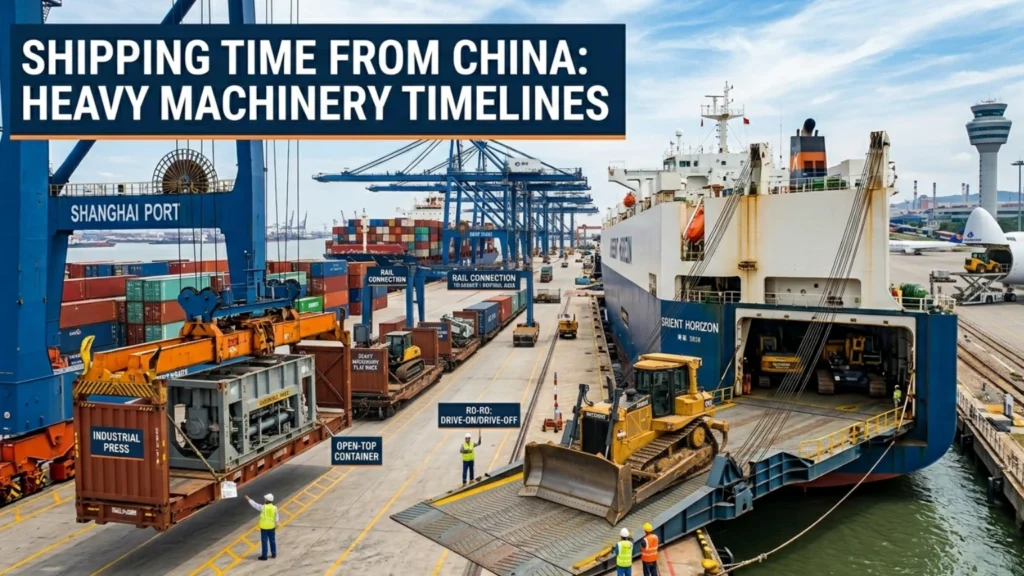
Sea freight transit time in China carries the majority of heavy machinery exports from China. Understanding how it works helps you make the right decisions on container type and loading method.
FCL vs. LCL: Which Is Right for Heavy Equipment?
One thing about FCL Shipping China machinery is that the box gets locked at the factory and stays shut until it arrives. Because fewer people move it around, there’s less chance that something goes wrong, a solid pick when shipping time-heavy machinery or expensive gear from China. With LCL, stuff piles into shared containers, going through several spots where things get shifted or swapped. That often means more hands on your shipment along the way. Machines like excavators, industrial presses, generators, and air compressors? They usually ride in full containers just to avoid those extra moves.
Flat Rack and Open-Top Containers
Out in the open, heavy equipment imported from China is too wide for regular boxes to ride on flatbed frames or underlifted tops. When space stretches in shipping time heavy machinery from China beyond normal limits, those options step in, though straps and covers become essential because rain and wind find their way easily. Bare cargo needs extra care against shifting or soaking during long journeys across sea freight transit time from China.
RoRo Shipping for Self-Propelled Equipment
On ships that roll cargo on and off, heavy machines move under their own power. Instead of cranes hoisting them, bulldozers or backhoes drive straight into the hold. These vessels carry gear much like standard container runs take boxes across sea freight transit time from China. While inside, though, wind and salt air reach the metal more easily than in closed containers.
Not sure which shipping method is right for your equipment? Kingsler Machinery can help you choose the safest and most cost-effective option based on your machine’s size, weight, and destination.
Customs Clearance: How Many Extra Days Can It Really Add?
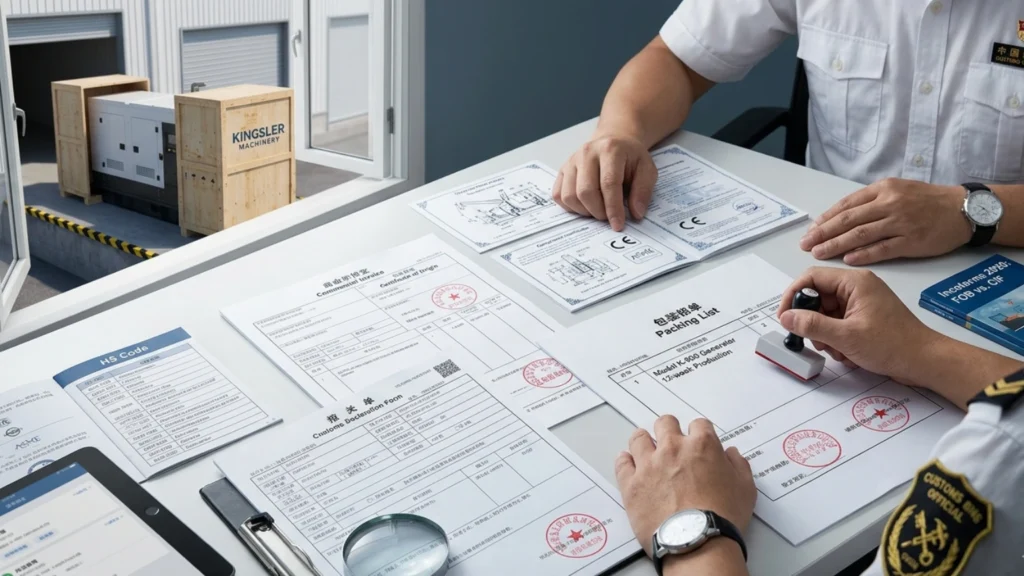
Customs clearance for shipping heavy machinery from China is where well-planned shipments sail through in a day or two, and poorly prepared ones sit for weeks, generating daily fees. The difference almost always comes down to documentation.
Key Documents You Must Have Ready
- Commercial Invoice, with correct HS codes, declared value, and accurate buyer and seller details
- Bill of Lading or Air Waybill
- Packing List, including weights, dimensions, and crate breakdown
- Certificate of Origin
- Compliance or Safety Certificates vary by destination country and machine type
- Import Security Filing, ISF 10+2 for US-bound shipments, filed at least 24 hours before vessel loading
Common Documentation Mistakes That Cause Delays
- Incorrect HS code classification
- Mismatched values across the invoice, packing list, and bill of lading
- Missing import filings, a missing ISF alone, can trigger a $5,000 fine and delay cargo release
- Incomplete safety or compliance certificates are required at the destination
How Long Does Customs Clearance Take?
Clear papers usually mean customs finishes in one to five workdays at big harbors. Mistakes or blank forms? If shipping heavy machinery from China, then expect two weeks, sometimes even longer. When a container just sits there doing nothing, charges begin right away. Every late document adds expense by the day. Paperwork stuck means money lost.
The Full Timeline: From Order to Delivery
Here is the complete end-to-end breakdown of a heavy machinery shipment from China:
| Stage | Typical Timeframe |
| Production / Lead Time | 2–12 weeks |
| Export Packing & Port Delivery | 3–7 days |
| Sea Freight Transit | 15–45 days |
| Customs Clearance at Destination | 1–10 days |
| Inland Trucking / Final Delivery | 1–7 days |
| Total Realistic Window | 6 weeks to 5 months |
The range is wide in FCL shipping China machinery because the variables are wide. In-stock machinery combined with complete documentation puts you closer to the lower end. A custom-built machine with paperwork issues at customs puts you at the higher end. Most buyers end up somewhere in the middle, and most delays were avoidable.
How to Reduce Shipping Time for Heavy Machinery from China
Faster delivery is mostly about preparation, not speed in importing or shipping heavy machinery from China. The buyers who consistently hit their deadlines do the same things before the machine leaves the factory.
- Confirm stock availability first; the clock starts at order confirmation, not at booking. If import heavy equipment from China production is needed; get that lead time in writing before committing to a delivery date
- Prepare all documents before the vessel departs, not after it arrives. Waiting until the ship docks to gather paperwork is the most common and avoidable cause of demurrage fees
- Book container space 4–6 weeks in advance, especially during August through October when capacity tightens fast
- Choose a freight forwarder with specific heavy- and oversized-cargo experience; general forwarders miss the details that matter for machinery
- Clarify Incoterms upfront; FOB and CIF are the most common for machinery imports, and each places responsibility differently on the buyer and seller
- Confirm inland logistics before the ship arrives. Crane access, forklift capacity, and site access need to be arranged in advance, not the day the container clears customs
- Avoid peak-season bookings where possible; planning around August through October saves both time and money
To better understand the factors that affect shipping time for heavy machinery from China, review Kingsler Machinery’s detailed guide and plan your project timeline more accurately.
Final Thoughts
Most delays start in shipping heavy machinery from China long before a shipment leaves port. When buyers watch only the travel clock, they miss what happens earlier. Production schedules slip if not tracked closely in FCL shipping China machinery. Paperwork piles up without clear oversight. Customs waits grow longer when details arrive late. Costs climb fastest when planning stops at the factory gate. Smooth moves depend on seeing each step, not just the last leg.
Most errors can be sidestepped. What shifts things is teaming up with folks experienced enough to spot trouble early in shipping heavy machinery from China. These factors stay within reach.
Every step moves smoothly because Kingsler Machinery handles it all. Starting in Chinese factories, checks confirm quality before anything ships. Paperwork gets sorted without delays. Bookings lock in space on cargo vessels ahead of time. Coordination keeps everything moving toward arrival day. The machine shows up right on schedule, nothing held back.
Want to avoid costly shipping delays and unexpected customs issues? Contact Kingsler Machinery to get expert support with factory inspections, documentation, and end-to-end machinery shipping from China.
FAQs on Shipping Heavy Machinery from China
How long does shipping heavy machinery from China to the USA take?
Shipping usually takes 20–45 days by sea depending on the route, port, and customs delays when shipping heavy machinery from China.
What is the cheapest way of shipping heavy machinery from China?
Sea freight (FCL or LCL) is the cheapest option for shipping heavy machinery from China, especially for oversized cargo.
Is air freight a good option for shipping heavy machinery from China?
Generally no, because air freight is too expensive and has strict weight and size limits for heavy machinery.
What causes delays when shipping heavy machinery from China?
Most delays come from customs inspections, missing paperwork, and port congestion during shipping.
What Incoterms are best for shipping heavy machinery from China?
FOB and CIF are most common, while DDP is preferred for a hassle-free all-inclusive shipping setup.
Do I need a freight forwarder for shipping heavy machinery from China?
Yes, a freight forwarder is highly recommended to manage logistics, documentation, and shipping coordination.
How long does customs clearance take for heavy machinery imports?
Customs clearance usually takes 3–10 days if documents are complete and no inspection delays occur.
What documents are required for shipping heavy machinery from China?
You typically need a commercial invoice, packing list, bill of lading, and import permits or certifications depending on the machinery type.
How early should I book shipping for heavy machinery from China?
Booking 2–6 weeks in advance is recommended to secure space and avoid last-minute delays.