


Blogs
Paper Bag Making Machine Guide: Types, Speeds, and How to Choose
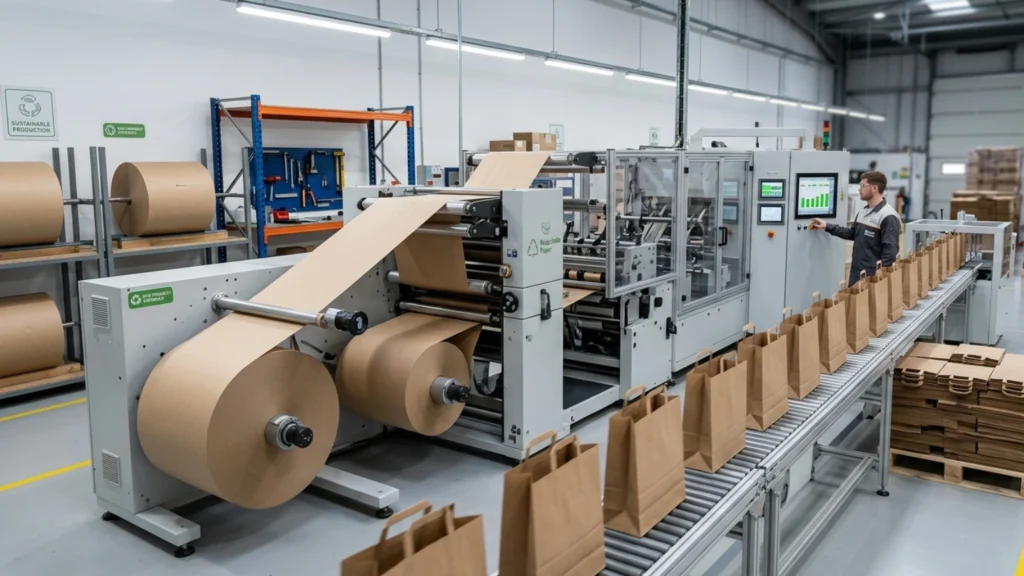
These days, stepping into a shop means seeing paper bags nearly everywhere. A shift started years back now feels complete. Instead of plastic, people reach for brown sacks without thinking twice. Takeout spots hand them out like usual. Firms focused on lower impact: grab them by the batch. What felt rare before is simply how things are done now.
It’s not just a trend anymore; it’s become the norm, and groups like the Sustainable Packaging Coalition have been tracking that shift for years. Starting a new chapter with a paper bag making machine guide might sound straightforward, yet it demands more than guessing along the way. Picture yourself stepping past surface-level advice; real clarity comes from knowing every twist involved. Instead of tossing darts at random options, consider how each choice shapes output volume, bag strength, and long-term results.
Think carefully. A well-informed path often separates steady growth from endless struggle.
What Is a Paper Bag Making Machine?
Let’s keep this simple. A paper bag making machine guide is basically sophisticated equipment that takes raw paper and transforms it into finished bags that you can actually use at scale. It’s the kind of thing that would take an army of people doing by hand what a single machine does in a fraction of a second.
Here’s what’s kind of mind-blowing about the modern paper bag making machine guide, depending on what you get, they can pump out anywhere from 30 bags to over 400 bags every single minute. That’s the difference between a small workshop setup and an industrial powerhouse. The automation involved doesn’t just speed things up, it dramatically cuts down labor costs and gives you way more consistency than you’d ever get with manual production.
If you are sourcing this equipment internationally, working with a trusted paper bag making machine manufacturer ensures you get verified specs, quality guarantees, and proper after-sales support from day one.
Common Applications
You’d be surprised how much variety there is in the paper bag making machine guide. Let Kingsler Machinery walk you through some real-world applications:
- Retail Shopping: Those fancy shopping bags from luxury boutiques? Retailers choose them on purpose; they match the upscale feel. A sleek bag doesn’t just carry items, it quietly boosts perception. Looks matter here more than most admit. Style becomes part of the product without saying a word. Customers notice, without knowing why.
- Food Packaging: Boxes for meals on the go. Wrappers at bakeries. Items that hold food safely. This area has been growing fast lately. Some big eateries get special sacks printed with their names. Branding drives every order they place
- Fast Food Chains: Major restaurant chains custom-order bags with their logos. It’s all about branding.
- Grocery Retail: Everyday shopping means standard grocery bags, they remain top sellers by far. Most people grab these on regular store trips. Volume stays highest here compared to others. Simple design, common use. These sacks handle bread, milk, and snacks without fuss. Still dominates the market overall.
- E-commerce: Online shops are switching to paper for shipping because it’s cheaper, and customers prefer it
- Specialty Markets: Pharmaceutical companies, seed packets, niche applications; there’s surprisingly big demand
Types of Paper Bag Making Machines
Okay, so here’s where it gets real. Different paper bag machine types exist for a reason; they solve different problems. You can’t just pick one randomly and expect it to work for you. Let me break down what’s actually out there and what each one is really good at.
Flat Bottom Paper Bag Machine
You know those really nice bags that department stores use? The ones that look professional and sturdy? That’s the flat-bottom design, and for good reason. These paper bag making machine guides have been the go-to for luxury retail for years because they just look better.
What makes them special?
- They have this beautiful, flat base that gives you tons of space for branding
- They look premium, which customers actually care about
- They’re incredibly sturdy and can handle heavy stuff
- Perfect if you want your brand to really stand out
These work great for: High-end retailers, luxury brands, and anyone who wants their bag to be part of the experience.
If you’re thinking about which paper bag machine types to buy and your customers care about how your bags look, flat-bottom machines are worth the extra investment. They’re literally a marketing tool you’re handing to customers.
V-Bottom Paper Bag Machine
Now, not everyone needs bags that look like they’re from a high-end boutique. Enter the V-bottom design. These paper bag machine types are probably the most economical option on the market, and that’s because they’re ingeniously simple.
Here’s why they make sense:
- They literally use less paper because of the V-fold design
- Cheaper to produce, which means more profit for you
- They work perfectly fine for food, takeout, and general use
- Super easy to operate and maintain
Best for: Startups, food delivery services, bakeries, restaurants, and basically anyone watching their costs. A lot of buyers honestly recommend V-bottom designs when businesses are just starting out; you get solid functionality without breaking the bank, and that matters when you’re still figuring out your market.
If this style fits your operation, the V-bottom paper bag making machine from Kingsler Machinery is worth a close look for its efficiency and ease of use.
Square Bottom Paper Bag Machine
Square bottom bags sit right in the middle, and that’s actually a really smart spot to be. They’ve become seriously popular in recent years for good reason. These paper bag machine types give you the best of both worlds.
Why they’re gaining ground:
- Way more capacity than V-bottom without compromising looks
- They look professional but don’t cost quite as much as a flat bottom
- Super versatile, you can use them for almost anything
- Global demand for this style just keeps growing
Great for: General retail, grocery deliveries, and anyone who wants a balanced solution
The cool thing? Automatic paper bag machine technology has made square-bottom production so accessible that even smaller operations can compete with the big guys now.
Fully Automatic Paper Bag Machine
If you’re running a serious operation and volume is your priority, this is what you’re looking at. The CTI-228 fully automatic sheet feeding paper bag making machine is a great example of what modern automation looks like — feed raw material in one end and finished bags come out the other with minimal human interaction.
What you get with full automation:
- Production speeds are hitting 200, 300, and even 400+ bags per minute
- You don’t need an army of workers; labor costs drop dramatically
- The output is absurdly consistent, like, eerily consistent
- Built-in safety features are necessary because industrial equipment has to be safe
- Programmable settings so you can swap between different bag specs instantly
For: Large manufacturers, enterprises, anyone processing massive volumes Here’s the real talk about investing in an automatic paper bag machine: yes, it’s expensive upfront. But if you’re moving serious volume, the labor hours you save alone often pay for the machine in a year or two. It’s that kind of investment.
Semi-Automatic Machines
Not everyone needs full automation, and that’s where semi-automatic equipment shines. These paper bag making machine guides let you scale up without going all-in on massive capital investments. You’re still involved in the process, but the machine handles the repetitive stuff.
The upsides:
- Way cheaper to get started compared to fully automatic systems
- Easier to maintain and fix when something goes wrong
- Great if your demand fluctuates month to month
- Doesn’t take a rocket scientist to learn how to operate
- Perfect for testing new bag designs without huge risk
Perfect for: Small businesses, startups, and anyone still experimenting with their product line
Paper Bag Machine Speed and Capacity
Let’s talk about something that actually matters in the paper bag making machine guide, how much your machine can actually produce. This is where a lot of people mess up: they either underestimate their needs or overestimate them.
How Speed Is Measured
The paper bag making machine guide industry uses pretty standard metrics to measure production, which is honestly helpful because you can compare apples to apples.
Bags Per Minute (BPM) is the basic measure. It tells you exactly how many bags roll out every 60 seconds. Pretty straightforward, right? Output Per Hour is just BPM multiplied by 60. So a 150 BPM machine? That’s 9,000 bags an hour. This number actually matters more when you’re trying to figure out if the machine will handle your actual business needs.
For example, if a bakery needs 5,000 bags a day and operates 10 hours, they need about 500 bags per hour. A 150 BPM machine gives them 9,000/hour, way more than enough with room to grow. That’s how you figure out if equipment is actually right for you.
Typical Speed Ranges
- Low-speed machines (30-80 BPM) are your entry-level gear. These are for small operations, specialty work, or when you’re just testing the waters. They use less power and don’t need a ton of space.
- Medium-speed machines (100-200 BPM) are honestly the sweet spot for most businesses. You get decent capacity, the cost is reasonable, and mid-sized manufacturers love these.
- High-Speed Industrial Machines (250-400+ BPM) are what big operations run. These need serious power and experienced operators, but if you’re doing enterprise-level work, this is what you need.
When you’re shopping to buy paper bag machine China, manufacturers will give you specs in these ranges. That’s your signal to match the machine to what you actually need to produce.
Factors Affecting Machine Speed
Here’s something they don’t always tell you in the spec sheets: a lot of factors mess with your actual output speed. The machine might be capable of 200 BPM on paper, but in reality?
- Paper Quality: Cheap, thin paper behaves differently from premium stuff. Sometimes you gotta slow down
- Complexity: If your bags have custom prints, special folds, or handles attached? Yeah, speed goes down
- Maintenance: A well-maintained machine runs faster. A neglected one? Totally different story
- Operator Skill: An experienced operator will get way better speeds and consistency than someone brand new
- Environment: Weird but true, humidity and temperature actually affect how paper behaves
Key Features to Consider When Buying
Before you actually commit money, there are some genuinely important features to think through from the paper bag making machine guide. This isn’t just theoretical stuff; getting these wrong can actually hurt your business.
How Much Automation Do You Actually Want?
This is usually the biggest decision because it ties directly to your budget and labor situation. Fully automatic? Costs way more upfront, but your labor costs disappear. Semi-automatic? Cheaper to buy, but you need people running it.
Real talk: think about your production forecast, how much money you actually have to invest, and what labor availability looks like in your area. That combo determines your best option.
Material Compatibility: Does It Handle What You Need?
Not all machines are created equal. Some crush it with a kraft paper bag machine, others work better with bleached stock, and some are flexible across different materials. The best paper bag making machine guides always emphasize this because it matters.
A really good kraft paper bag machine design includes adjustable settings that let you work with different papers while keeping quality consistent. That flexibility is actually worth paying for.
Can You Customize?
Customers increasingly want personalized bags. Your equipment should actually support that. Can you do custom sizing? Printed logos? Different handle types? Special folds? That’s what separates okay equipment from great equipment.
How Efficient Is It?
Look, modern machinery is obsessed with efficiency and for good reason. Calculate your long-term energy costs. Sometimes a more efficient machine costs more upfront but pays for itself through lower operating costs over 18-36 months. Math matters here.
Maintenance, What’s Realistically Required?
Don’t buy a machine without understanding what keeping it running actually costs. Following proper quality control tips during and after installation helps extend machine life, reduce breakdowns, and maintain consistent output from day one.
You can check out Kingsler Machinery’s full product catalog featuring real, quality machinery for more broad options.
How to Choose the Right Paper Bag Machine
Alright, this is the decision part. Let me walk you through how to actually think about this practically.
Start With Your Production Volume
You’ve gotta be realistic here and understand paper bag making machine guide. A bakery making 5,000 bags daily needs completely different equipment than a retailer pushing 100,000 bags weekly. The gap is huge.
Here’s a practical framework:
- Figure out your daily bag requirement based on actual orders (not hopes)
- Project realistic growth for the next 3-5 years
- Pick equipment with maybe 20-30% extra capacity for breathing room and growth
Match the Machine to Your Bag Type
Different paper bag making machine guide types excel at different things. This should be obvious once you think about it:
- Shopping bags? Flat or square-bottom machines
- Food packaging? V-bottom or specialized kraft paper bag machine
- Weird specialty stuff? You probably want a semi-automatic that you can adjust
Be Real About Your Budget
Don’t just look at the machine price. Account for shipping (this matters more when you buy a paper bag machine from China), installation, training your staff, spare parts inventory, workspace prep, all of it. If you’re trying to keep the upfront spend lower, Kingsler’s second-hand machine options are also worth a look.
Think About Your Business Model
This actually matters more than people realize.
If you’re doing B2B manufacturing, you need flexible equipment that handles custom specs from different clients. An automatic paper bag machine makes sense because volume and consistency are everything.
If you’re a retailer making private-label bags, you need something that balances cost with quality. Semi-automatic usually wins here.
If you’re just starting out, honestly? Go smaller. Expand later. New business owners always overestimate their needs.
Paper Bag Machine Price in China
Let me be honest: China is where most of the world’s paper bag making machine guide gets made. And there’s nothing wrong with that. The quality has gotten genuinely good, and the pricing is way better than alternatives.
What Affects Pricing
Here’s what you’re actually paying for when you look at a paper bag making machine price.
The Machine Type Itself:
- V-bottom machines start around $15,000-$30,000
- Flat bottom goes from $25,000-$50,000
- Automatic paper bag machines range from $50,000 to over $200,000
- Specialty kraft paper bag machine models sit around $35,000-$150,000
Cost vs Value
Here’s something you will need to know: the machines people buy for the lowest price usually end up being the most expensive over time. Why? Because they break down more, need expensive repairs, don’t last as long, and the company that sold it doesn’t really care once you’ve paid.
A machine that costs 20% more but is made by a company that stands behind it? That usually wins in the long run. Smart buyers calculate the total cost of ownership across 5-10 years. You factor in maintenance, parts, energy, labor, everything. When you do that math, the “expensive” machine is often the cheapest option.
Why Buy a Paper Bag Machine from China
China makes most of this equipment for a reason. Let me explain why that’s actually a good thing for you, especially if you want to understand broader material and efficiency trends that the EPA Sustainable Materials Management program also highlights:
The Pricing Really Is Better
Chinese manufacturers work with lower labor costs (those are just facts), they’ve built massive supply chains for components, and competition keeps pushing prices down. You’re looking at 30-50% savings compared to European or American equipment.
When you are ready to move forward, having a complete guide to buying machinery from China at hand will help you navigate supplier selection, payment terms, quality checks, and shipping logistics without costly mistakes.
You’ve Got Options
When you buy a paper bag machine in China, you’re not choosing between three manufacturers. You’re choosing from hundreds of legitimate, experienced producers. Competition drives innovation. You benefit.
Customization Is Easy
Chinese factories are incredibly flexible. They’ll build exactly what you need: custom specs, small batches, integrated printing, whatever. That flexibility is hard to find elsewhere.
Common Mistakes Buyers Actually Make
- Choosing based on price only: The cheapest option almost never works out. It breaks down, support disappears, and you end up spending way more fixing problems than you saved upfront.
- Ignoring machine specifications: Speed, material compatibility, and output quality matter. Don’t just trust marketing materials. Dig into the actual specifications.
- Skipping Supplier Verification: Before you send money, verify the manufacturer. Check certifications. Look at their facilities if you can. Get references from actual customers.
- Not Testing Before Buying: Request demos on machines like what you’re buying. Run your actual materials through them. See how it performs in real conditions. Testing catches things specs don’t.
- Ignoring After-Sales Support: Machines eventually need maintenance and support. Make sure the company you’re buying from will actually be there for you after the sale. That matters.
How to Verify Paper Bag Machine Suppliers
Protecting your investment means doing your homework on whoever you’re buying from.
- Visit If You Can: See the actual factory if it’s feasible. Look at how clean it is and how knowledgeable the staff seems, and check out their quality control. If you can’t visit, ask for video tours.
- See It Run: Request demos on identical machines to what you’re buying. Run your paper through it. See if speeds and consistency actually match what they claim.
- Check Certifications: Legitimate manufacturers have ISO 9001, safety certifications, environmental compliance, and industry accreditations. Verify these are real.
- Talk to Their Customers: Get references. Call them. Ask about actual experiences, maintenance, and support quality. Talk to 3-5 references, not just the ones they recommend.
Role of a Machinery Sourcing Agent
Look, navigating all this alone is exhausting and, honestly, risky. That’s why partnerships with companies like Kingsler Machinery actually make sense. Here’s what they actually bring to the table:
- Supplier Verification: They already know which manufacturers are legit. They do the vetting, so you don’t have to waste time on dead ends.
- Technical Understanding: They actually understand the specs and what they mean for your specific needs. No overselling features you don’t need.
- Factory Inspections: They visit facilities and arrange testing to verify everything before your money is on the line.
- Logistical Complexity: International shipping, documentation, and customs are a headache. They handle it so equipment arrives safely and on schedule.
- Ongoing Support: Quality partners don’t disappear after the sale. They make sure you’re satisfied and help if issues come up.
- Real talk: good sourcing agents cost 5-8% of the machine price but typically save 20-30% through better negotiations and prevent costly mistakes. That math is easy.
If you want something specific, Kingsler Machinery’s fully automatic paper bag solutions are legitimately impressive, efficient, consistent, and built to last.
Final Thoughts
Choosing the right equipment? It’s honestly one of the bigger decisions you’ll make for your business. Get it right, and you’re set up for success. Get it wrong, and you’re fighting an uphill battle.
The key is understanding:
- What different paper bag making machine guide actually do, and which one fits your work
- Your realistic production needs, not inflated guesses
- Where to find reliable suppliers and how to vet them properly
- That the lowest price is almost never the best value
Yeah, paper bag making machine price matters. But not at the expense of quality and reliability. A solid machine from a trustworthy supplier consistently beats a cheap gamble, and if you want a formal benchmark for manufacturing quality, the International Organization for Standardization is a useful place to start.
If you’re ready to talk through your specific needs, reach out to Kingsler Machinery sourcing specialists. We’ll answer your questions, show you options, arrange demos, and help you make a decision you’ll feel confident about.
FAQs
What is the average production speed of a paper bag making machine?
Most machines produce between 30 and 400+ bags per minute. Small operations typically run 30–80 BPM, while industrial setups push 250–400+ BPM.
What types of paper bag making machines are available?
Three main styles exist: flat bottom (premium, retail-grade), V-bottom (budget-friendly, food use), and square bottom (versatile, middle ground). Each comes in semi-automatic or fully automatic versions.
How much does a paper bag making machine cost?
Expect to pay $15,000–$30,000 for basic V-bottom machines, $25,000–$50,000 for flat-bottom, and $50,000–$200,000+ for fully automatic systems.
Is buying a paper bag machine from China a good idea?
Yes. Chinese manufacturers offer 30–50% lower prices, hundreds of vetted options, and strong customization flexibility, making them the world’s preferred source for this equipment.
What should I watch out for when buying a paper bag machine?
Never choose on price alone. Always verify supplier credentials, test the machine with your actual materials, and confirm strong after-sales support before committing.
Get In Touch
We’d love to hear from you! Reach out with your questions or feedback.
- +8618957999107 , +8615867974765
- support@kingslermachinery.com
- 1711, Wuyue No.1 Mansion, Jiangdong Road, Yiwu City, Jinhua, Zhejiang Province