


Blogs
How Foil Balloon Making Machines Work: Manufacturing Guide
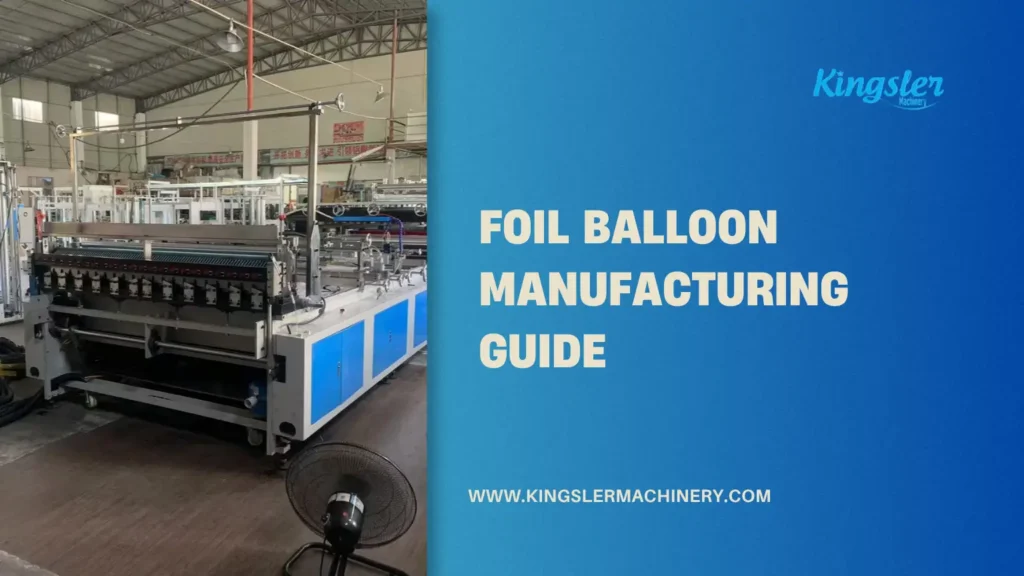
Demand for foil balloons continues to grow across the party, gifting, advertising, and event industries. Retailers, event planners, and brands rely on these balloons for decorations, promotions, and celebrations year-round. Automated foil balloon manufacturing has become essential for meeting this demand, since manual production cannot match the consistency or speed modern buyers expect. A foil balloon-making machine transforms raw film and printed material into finished balloons through a series of precise, repeatable stages. This guide explains how foil balloon manufacturing works, walking through the full foil balloon manufacturing process from raw material to finished product.
Understanding the complete manufacturing process helps businesses improve production efficiency and choose machinery suited to their goals. Kingsler Machinery serves as a trusted sourcing partner for manufacturers investing in reliable foil balloon manufacturing.
What Is a Foil Balloon Making Machine?
A foil balloon-making machine is industrial equipment that shapes, seals, and finishes printed foil film into ready-to-use balloons. As a foil balloon manufacturing machine, this equipment replaces manual cutting and sealing with automated, repeatable production. Party supply companies, advertising agencies, and gift manufacturers rely on these machines to produce balloons at scale.
Manual production still exists in small workshops, but it cannot match the speed or consistency of automated equipment. Semi-automatic machines bridge this gap, handling some steps mechanically while requiring manual input at others. Fully automatic machines complete the entire process, from feeding film to packaging finished balloons, with minimal human involvement.
An automatic foil balloon-making machine handles every stage of production without requiring constant operator input. The production workflow moves through feeding, alignment, sealing, cutting, valve installation, inspection, and packaging, with each stage building on the one before it.
Raw Materials Required for Foil Balloon Manufacturing
Foil balloon manufacturing starts with several core materials that determine the final quality of the product. Every stage of the foil balloon manufacturing process depends on these inputs meeting consistent quality standards.
- PET film provides the base layer that gives foil balloons their shape and strength.
- Aluminum foil laminated film creates the reflective surface most foil balloons are known for.
- Printed foil rolls carry the designs, colors, and branding used on finished balloons.
- Inflation valves allow balloons to be filled with air or helium after sealing.
- Printing inks apply designs to the film before the sealing and cutting stages.
- Adhesives help bond layers together during sealing for a secure, airtight finish.
- Packaging materials protect finished balloons during storage, shipping, and retail display.
Material quality directly affects balloon strength, sealing performance, appearance, and durability, so manufacturers should never treat sourcing as an afterthought. This is especially true for an aluminum foil balloon-making machine, where laminated film quality has a direct impact on the finished product.
Step-by-Step: How a Foil Balloon Manufacturing Works
Every foil balloon passes through a consistent manufacturing workflow before it reaches a finished, sellable state. The stages below explain how foil balloon manufacturing work, including how a foil balloon sealing machine forms each airtight edge.
Step 1: Feeding the Foil Material
The process begins with material loading, where rolls of foil film are mounted onto the machine. Roll feeding pulls the film through the system at a controlled pace. Automatic tension control keeps the film taut, preventing wrinkles or misalignment. An alignment system positions the film correctly before the next stage, setting the foundation for accurate printing and sealing.
Step 2: Aligning and Positioning the Printed Film
Registration marks printed on the film help the machine track exact positioning. Sensor alignment reads these marks and adjusts the film’s position automatically. Print positioning ensures designs line up correctly with the balloon shape before sealing begins. This precision reduces production waste, since misaligned film often results in unusable balloons.
Step 3: Heat Sealing the Balloon Shape
Heat sealing bonds the two layers of film together, forming the balloon’s outline. Temperature control keeps the sealing bars at a consistent heat level, since too much or too little heat weakens the bond. Pressure settings determine how firmly the bars press the film together. Together, these controls create airtight edge formation, which prevents leaks after inflation. This step is where a foil balloon sealing machine does its most critical work.
Step 4: Cutting the Balloon Design
Die cutting trims the sealed film into its final balloon shape using a precision tool. Shape accuracy ensures every balloon matches the intended design without irregular edges. Consistent production depends on how well the cutting dies are maintained over time.
Step 5: Inflation Valve Installation
Valve insertion adds the inflation valve to each balloon before it moves further down the line. Automatic placement systems position the valve precisely, so it seals correctly. Leak prevention depends on this step being done accurately, since a poorly placed valve can cause air loss.
Step 6: Quality Inspection
Seal strength gets tested to confirm the balloon can hold air without splitting. Air leakage testing checks for gaps or weak points that could cause deflation. Print quality inspection catches smudging or misalignment before packaging. Shape consistency checks ensure every balloon in a batch matches the approved design.
Step 7: Folding and Packaging
Folding prepares finished balloons for compact storage without damaging their shape. Counting systems track how many balloons are packaged per unit. Packaging protects balloons from dust, moisture, and handling damage during transport. Shipment preparation finalizes the batch for departure from the factory.
Main Components of a Foil Balloon Manufacturing Process
Every foil balloon manufacturing relies on several core components working together. Understanding these parts helps buyers evaluate any foil balloon production machine before purchasing.
- The feeding unit pulls film through the machine at a controlled, consistent speed.
- A servo motor powers precise movements throughout the entire production sequence.
- The heating system generates and maintains the temperature needed for sealing.
- Sealing molds shape the film into the balloon’s outline during the sealing stage.
- Cutting dies trim excess material and finalize the balloon’s exact shape.
- A PLC control system manages timing and coordination across every machine function.
- The touchscreen interface lets operators adjust settings and monitor production in real time.
- Pneumatic cylinders control the mechanical movement of sealing and cutting components.
- Sensors detect film position, tension, and alignment throughout the production process.
- An air compressor supplies the pressure needed to operate pneumatic components reliably.
Each of these components plays a specific role, and a weakness in any one of them can affect overall production quality.
Types of Foil Balloon Manufacturing Machines
Manufacturers can choose between three main machine categories depending on their production goals. Each type suits a different scale of business and budget.
- Manual machines require significant hands-on operation and suit very small workshops.
- Semi-automatic machines handle some steps automatically while still needing operator involvement.
- Fully automatic machines manage the entire process with minimal human intervention required, often built around a dedicated foil balloon sealing machine unit.
The table below compares production capacity, labor requirements, automation level, and typical use case for each type.
| Machine Type | Output | Automation | Best For |
| Manual | Low | Low | Small workshops |
| Semi-automatic | Medium | Moderate | Growing manufacturers |
| Fully Automatic | High | High | Large-scale factories |
Choosing between these categories often comes down to balancing upfront investment against long-term production needs. A fully automatic foil balloon production machine costs more initially but often lowers labor expenses over time.
Choosing the Right Foil Balloon Manufacturing Machine for Your Production Needs
Choosing the right machine depends on matching equipment capability to your actual production goals. Production capacity should align with expected order volume, since an undersized machine limits growth while an oversized one wastes capital. Balloon sizes and designs vary across product lines, so buyers should confirm a machine can handle their specific range. Production speed affects how quickly orders move from raw material to finished product. Automation level determines how much labor a facility needs to keep the line running smoothly.
Energy efficiency influences long-term operating costs, especially for factories running machines continuously. Machine footprint matters for facilities with limited floor space. Ease of maintenance affects how much downtime a business can expect over the equipment’s lifespan. Spare parts availability and technical support determine how quickly problems get resolved. Future production expansion should also factor into the decision, since upgrading equipment later often costs more than planning ahead.
Looking for the Right Foil Balloon Manufacturing Machine? Kingsler Machinery helps manufacturers compare suppliers, evaluate machine specifications, and source reliable equipment that matches their production goals.
Common Manufacturing Challenges and How to Solve Them
Manufacturers often face a handful of recurring problems during foil balloon production. Knowing the causes helps operators address these issues quickly within the foil balloon manufacturing process and prevent repeat occurrences.
- Weak sealing often results from incorrect temperature settings or worn sealing bars.
- Wrinkled material usually points to poor tension control during the feeding stage.
- Poor print alignment typically stems from sensor calibration errors or misread registration marks.
- Material waste increases when cutting dies are dull or improperly aligned.
- Air leakage often traces back to valve placement errors or weak seal edges.
- Machine overheating can occur from prolonged use without proper cooling or maintenance.
- Production downtime frequently results from delayed maintenance or unresolved mechanical issues.
Addressing these issues early, through regular inspection and prompt repairs, keeps production lines running smoothly and reduces costly interruptions. For manufacturers on a tighter budget, Kingsler can also advise on secondhand machinery China options that meet basic production needs.
Maintenance Tips to Improve Machine Performance and Lifespan
Regular maintenance keeps a foil balloon-making machine running efficiently over its full lifespan. This is especially important for an automatic foil balloon-making machine, since more components require regular attention. Following a consistent routine helps operators catch small issues before they become expensive repairs.
- Daily cleaning removes dust and film residue that can interfere with machine function.
- Lubrication keeps moving parts operating smoothly and reduces mechanical wear over time.
- Temperature calibration ensures sealing quality stays consistent across every production run.
- Inspecting sealing molds regularly catches wear before it affects balloon quality.
- Blade maintenance keeps cutting dies sharp, preventing waste and inconsistent shapes.
- Replacing worn components promptly prevents small issues from causing larger breakdowns.
- Preventive maintenance schedules help facilities plan repairs before problems disrupt production.
Following these practices consistently extends machine lifespan and protects the quality of every balloon produced.
How Kingsler Machinery Helps You Source Reliable Foil Balloon Manufacturing Machines
Kingsler Machinery supports buyers through every stage of sourcing foil balloon manufacturing equipment. The team handles supplier sourcing, connecting buyers with manufacturers that match their production requirements and budget. Factory verification confirms that a supplier operates legitimately and can deliver on stated specifications. Machine inspections take place before shipment, so buyers know equipment meets quality standards before it leaves the factory. Technical consultation helps buyers understand which machine type and configuration best fit their goals.
Quality control checks continue throughout the sourcing process, reducing the risk of receiving faulty equipment. Export coordination and shipping arrangements simplify the logistics of moving machinery from China to a buyer’s facility. Buyers weighing their sourcing options can also read our guide on Why You Need a China Mechanical Sourcing Agent for a broader context. After-sales support ensures buyers have somewhere to turn if issues arise once the machine is running.
Recommended Read: China 140th Canton Fair Phase 1
Final Thoughts
Foil balloon manufacturing machines transform raw materials into finished balloons through a series of automated manufacturing stages. Understanding how foil balloon making machines work helps manufacturers improve efficiency and choose equipment that meets their specific production goals. Buyers should weigh production capacity, automation level, maintenance needs, and supplier reliability carefully before investing in machinery, whether they need a full production line or just a dedicated foil balloon sealing machine. Taking time to evaluate these factors reduces the risk of costly mistakes down the line.
Ready to Source a Reliable Foil Balloon Making Machine? Whether you’re launching a new production line or upgrading existing equipment, contact Kingsler Machinery for high-quality machines.
FAQs
How does a foil balloon manufacturing machine work?
The machine feeds film through the system, aligns it, seals it into shape, cuts the design, installs the valve, inspects quality, and packages the finished balloon, completing the full foil balloon manufacturing process in one continuous line.
What materials are used to manufacture foil balloons?
Manufacturing requires PET film, aluminum foil-laminated film, printed foil rolls, inflation valves, printing inks, adhesives, and packaging materials.
What is the production capacity of a foil balloon manufacturing machine?
Capacity varies by machine type, ranging from low output on manual machines to high-volume production on a fully automatic foil balloon production machine.
What is the difference between manual and automatic foil balloon manufacturing machines?
Manual machines require hands-on operation at every step, while an automatic foil balloon-making machine completes the entire process with minimal human involvement.
How much does a foil balloon making machine cost?
Cost depends on automation level, with manual machines costing less upfront and fully automatic machines requiring a larger investment.
How often should a foil balloon making machine be maintained?
Daily cleaning and regular inspections are recommended, alongside a preventive maintenance schedule for deeper checks and part replacements.
How can Kingsler Machinery help source foil balloon making machines?
Kingsler Machinery supports supplier sourcing, factory verification, machine inspections, technical consultation, and after-sales support throughout the buying process.
Get In Touch
We’d love to hear from you! Reach out with your questions or feedback.
- +8618957999107 , +8615867974765
- support@kingslermachinery.com
- 1711, Wuyue No.1 Mansion, Jiangdong Road, Yiwu City, Jinhua, Zhejiang Province