


Blogs
Weeks go by while future owners haggle over the equipment’s price and line up shipping details, only to rush the choice of entry point into America. Picking a harbor on impulse, they overlook what comes next: fees creep in, delays stack up, and problems emerge far later than anyone expected. This is why understanding the US port of entry for imports matters before any shipment leaves China.
Wrong ports lead to extra miles by truck, steeper shipping bills, delays at customs, and storage charges piling up while containers wait. Picking a smart entry point matched to where you’re sending goods and how they travel overland, plus today’s traffic at terminals, cuts overall expenses fast, long before equipment ships out from China. Choosing the right US port of entry for imports can significantly reduce logistics costs.
We at Kingsler Machinery make sure that your machinery leaves from the China mainland and is received properly in the US where you want so that there is extra logistics to take care of.
What Is a Port of Entry in the USA?
Imported items reach the United States through specific spots meant for processing. These places are set up so officials can check what comes in. One such agency involved is called the US Customs and Border Protection. Machines coming from abroad must go through these checkpoints. Skipping them isn’t allowed under any circumstances. Every US port of entry for imports serves as an official gateway where imported machinery is inspected and released. Businesses importing industrial equipment often compare shipping methods like FCL vs. LCL shipping for heavy machinery.
Why Ports of Entry Matter for Machinery Imports
Wrong port? That means longer waits at customs, plain and simple. Instead of smooth sailing, delays stack up right away. Distance to your destination climbs, so trucking bills often climb too high, higher than shipping across the sea. Each trip pays extra when the entry point is off target. Costs pile on without warning, hidden in geography. Selecting the right US port of entry for imports helps importers avoid these hidden expenses.
Major US Ports of Entry for Machinery Imports
Heavy machines coming from China might land at any big U.S. port, yet only some handle such cargo well. Which spot works best ties back to delivery location, along with time, cost, and ease concerns. Location goals shape what choice fits. These USA ports for machinery import are among the most efficient options available. Many buyers also read guides on how to source heavy machinery from China to reduce import expenses.
Port of Los Angeles (POLA)
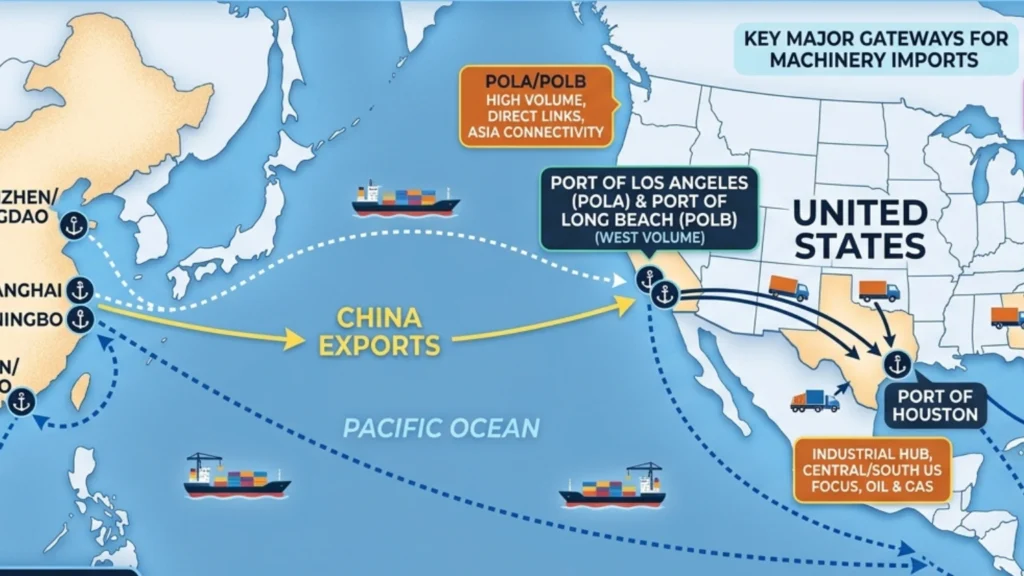
On the edge of the Pacific, massive ships unload daily near Los Angeles. Most cargo arriving from Chinese factories passes through here first. Huge stacks of metal boxes wait minutes, not days, thanks to fast inspection lanes. Sailing links tie it straight to Shanghai, Ningbo, and Shenzhen without stops. Heavy equipment moves smoothly toward warehouses in California, Oregon, and Washington. For many buyers, Los Angeles is the best US port for container imports on the West Coast.
Port of Long Beach
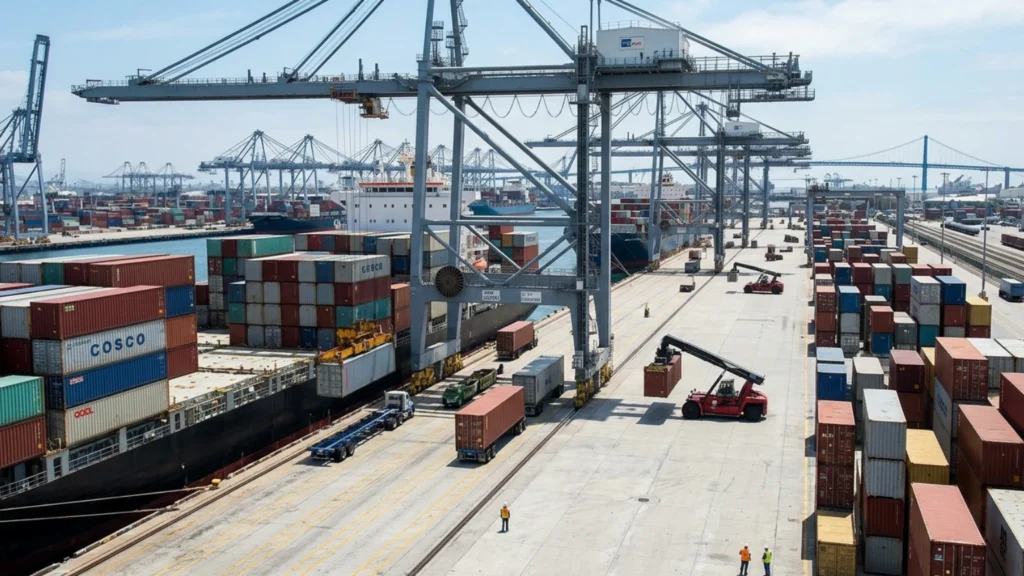
Operates alongside Los Angeles, and together the two ports handle more container traffic than any other gateway in the country. Long Beach is a strong option for industrial equipment imports and offers efficient container handling for heavy and oversized cargo. It is one of the most reliable USA ports for machinery imports and a major US port of entry for imports for cargo arriving from Asia.
Port of New York and New Jersey
The main East Coast entry point for China imports is routed through the Panama Canal or via transshipment. It provides good access to major population and industrial centers on the East Coast. Transit times from China are longer than West Coast ports, but inland delivery costs to East Coast destinations are significantly lower. These machinery import USA customs ports are ideal when the final destination is in the Northeast. Many importers also consider this region the best US port for container imports for East Coast distribution.
Port of Houston
A strong industrial import hub with less congestion than the major West Coast ports. Houston is particularly well-suited for heavy machinery, oil and gas equipment, and construction equipment heading to Texas and surrounding states. The port handles oversized and project cargo regularly. Houston is often selected as the US port of entry for imports for industrial buyers in the South and is among the top USA ports for machinery imports.
Port of Savannah
One of the fastest-growing container ports in the country. Savannah has invested heavily in infrastructure and offers efficient customs clearance with less congestion than New York. It is a cost-effective East Coast option for machinery imports heading to the Southeast and Midwest. Savannah is frequently ranked as the best US port for container imports when speed and cost efficiency are both priorities.
Inland Ports and Distribution Hubs in the USA
For machinery heading to central US destinations, coastal ports are not always the most efficient choice. Inland ports and distribution hubs can reduce total delivery time and cost by cutting long-haul trucking distances. These inland hubs work closely with major machinery import USA customs ports to streamline domestic delivery.
Chicago Inland Port
Out in the middle of the country, Chicago ties together trains coming from east and west, while roads fan out every which way. When heavy equipment heads toward heartland states, hopping on a train from a Pacific harbor, then cutting through Chicago beats going straight by rig saves time and money. Chicago supports many importers after cargo clears through a US port of entry for imports.
Dallas–Fort Worth Logistics Hub
Out in the middle of the country, Dallas–Fort Worth moves goods across the southern and central United States. Because it sits far from the coast, businesses farther inland rely less on seaports when shipping through here. High-traffic freight routes link directly to this hub, stretching toward northern states, down south, and out west. It complements several USA ports for machinery import by improving inland transportation efficiency.
How to Choose the Best Port of Entry for Machinery Imports
The best US port of entry depends on your warehouse location, shipping cost, inland transport distance, and customs congestion levels. Ocean freight gets the machine to the port; inland logistics gets it to you. Selecting the right US port of entry for imports requires evaluating both ocean and domestic transport costs.
Based on Destination
- West Coast USA — Los Angeles or Long Beach
- East Coast USA — New York/New Jersey or Savannah
- Central and South USA — Houston or Chicago
West Coast destinations are best served by Los Angeles or Long Beach. East Coast destinations suit New York/New Jersey or Savannah, depending on where exactly the machine is going. For central and southern US locations, Houston or Chicago will almost always reduce your total inland cost. This is why many buyers compare the best US port for container imports before finalizing shipment routes.
Based on Cost Efficiency
Inland trucking costs are often the deciding factor. A cheaper ocean freight rate to Los Angeles means little if your warehouse is in Georgia and you are paying premium trucking rates for a cross-country haul. Always calculate the total landed cost of ocean freight plus inland delivery before choosing a port. The most economical US port of entry for imports is the one that minimizes both sea freight and inland transportation costs.
Based on Speed
Less congested ports process containers faster. Savannah and Houston consistently offer quicker customs clearance than Los Angeles during peak periods. If your delivery timeline is tight, routing through a less congested port can save more time than a faster vessel. For urgent shipments, these locations are often considered the best US port for container imports.
Port Congestion and Its Impact on Machinery Imports
Port congestion is one of the most common causes of delays that buyers did not plan for and cannot control once the container is on the water. Monitoring traffic at major machinery import USA customs ports can help avoid unexpected disruptions.
Causes of Delays
- High container traffic is overwhelming terminal capacity
- Customs inspections triggered by documentation issues or random selection
- Seasonal peaks, particularly August through October, when import volumes surge across all major ports, including many USA ports for machinery import
Effects on Importers
- Demurrage and storage fees that accumulate daily once the container is idle
- Late deliveries that push back installation, commissioning, and production start dates
- Knock-on delays across the supply chain that are difficult and expensive to recover from
Customs Clearance Process at US Ports
Customs clearance at US ports involves document submission, inspection if required, duty payment, and release by US Customs and Border Protection. Most compliant shipments with complete paperwork are clear in one to five business days. Shipments with errors or missing documents can sit for two weeks or more. Every US port of entry for imports follows this same basic clearance procedure.
Required Documents
- Bill of Lading: confirms cargo details and transfer of ownership
- Commercial Invoice: must include correct HS codes, declared value, and accurate buyer and seller information
- Packing List: itemised breakdown of crates, weights, and dimensions
- HS Code details: correct classification is critical; wrong codes trigger inspections and potential penalties
- ISF 10+2 Filing: required for all US-bound ocean freight, filed at least 24 hours before vessel loading through approved machinery import USA customs ports
Common Mistakes Importers Make When Choosing Ports
Most importers pick the port offering the lowest shipping rate yet forget to check how much it costs to move goods by land to where they’re needed. Savings vanish once a long-haul truck invoice shows up. Picking a jammed-up terminal at busy times often backfires. Not checking if storage space or lifting gear is ready before the shipment gets through border checks causes trouble later. These oversights add expense and waiting time, long after choices were locked in. Careful planning helps identify the right US port of entry for imports. Many businesses also use sourcing support, as explained in Kingsler Machinery’s sourcing services for smoother logistics planning.
Real Example: China to USA Machinery Shipping Route
A practical example of how a typical machinery import moves from the factory to final delivery:
Factory (Shandong, China) → inland trucking to Qingdao Port → ocean freight to Port of Los Angeles → CBP customs clearance → inland trucking to Texas warehouse
In this case, routing through Houston instead of Los Angeles would have reduced the final trucking leg significantly. The ocean freight cost difference was minor. The inland savings were not there. This example highlights why Houston may be the best US port for container imports for southern destinations.
Role of Freight Forwarders in Port Selection
An experienced freight forwarder does more than book space on a vessel. For machinery imports specifically, a good forwarder will:
- Recommend the optimal port based on destination, cargo type, and current congestion levels at USA ports for machinery import
- Handle all customs documentation to avoid holds and demurrage
- Coordinate inland delivery, crane requirements, and final site access
- Optimise the total logistics cost across every stage, not just the ocean leg
The difference between a general freight forwarder and one with specific heavy machinery experience shows up at exactly these decision points.
Avoid costly shipping mistakes. Get expert guidance from Kingsler Machinery on choosing the best US port of entry for your machinery imports.
Best Strategy for Machinery Importers
- Select your port based on the final destination first, not on the ocean freight cost alone
- Always calculate total landed cost, ocean freight plus inland transport, before committing to a route
- Avoid congested ports during peak season (August through October), where alternatives exist among major machinery import USA customs ports
- Work with a logistics partner who has handled heavy and oversized cargo before, not one learning on your shipment
Final Thoughts
Choosing the wrong port isn’t just a small oversight. That decision shapes the full price of your shipment, how fast things arrive, and even whether paperwork slows everything down. Those who skip careful thinking here usually face higher bills and delays, while others move more quickly by deciding early. The right US port of entry for imports can make a substantial difference.
Before booking a container, pick a port that keeps sea shipping fees low while also cutting down on land transport miles. One wrong choice slows everything down, and delays pile up when border checks back up near the dockyard. Missing timelines often tie back to how far trucks must travel after arrival. Juggling these pieces early avoids last-minute chaos later. Importers should compare the best US port for container imports based on their final destination and timeline.
Planning machinery imports from China? Contact Kingsler Machinery to help you choose the right US port and reduce your total landed cost.
FAQs
What is the best US port for machinery imports?
The best port depends on your cargo origin and destination. The Port of Houston works well for heavy machinery and industrial equipment because of its strong breakbulk and project cargo handling. The Port of Los Angeles suits high-volume imports from Asia.
Which port is cheapest for China imports?
Costs vary by shipping line, inland transport, and port congestion. West Coast ports like Port of Long Beach often reduce transit time and shipping costs for imports from China compared to East Coast routes.
How long does customs clearance take at US ports?
Customs clearance usually takes 1 to 5 business days if documents are complete and inspections are not required. Delays happen during peak seasons or when customs requests additional verification.
What is the busiest port in the USA?
The Port of Los Angeles is the busiest port in the United States by container volume. It handles a large share of trade between the US and Asia.
Which port is best for West Coast imports?
The Port of Long Beach and the Port of Los Angeles are top choices for West Coast imports because they offer strong shipping connectivity, faster Pacific routes, and major logistics networks.
Do inland ports handle machinery imports?
Yes. Inland ports support machinery imports through rail and trucking connections from seaports. They help with storage, customs processing, and faster regional distribution for industrial cargo.