


Blogs

Getting packaging machines from China might save money, yet trouble often shows up once the shipment lands. When a faulty unit reaches your site, operations stall, fixes add up, and getting replies means hunting down a distant vendor. Most of these headaches could have been skipped. Spotting packaging machine defects china and other common machine defects China suppliers overlook arms you with leverage to catch red flags, push back on specs, and shield your budget long before metal parts leave port.
Why Defects Occur in Chinese-Manufactured Machines
Most packaging machines stumble on weak seals, uneven results, breakdowns in moving parts, glitches in wiring or software, or simply running slower than promised. These are typical packaging machine quality issues and industrial machine quality issues China buyers face. Some flaws shout themselves obvious, say, a pouch failing to close tightly. Others stay quiet until months pass before acting up. Spotting these signs early changes how you choose, making decisions less shaky. A leak today might mean deeper trouble tomorrow.
Why Defects Occur in Chinese-Manufactured Machines
Out there among China’s many packaging machine makers, skill levels run high, yet just as common are vendors slashing prices hard, often cutting corners that show up later. Problems pop up for reasons deep within how things get made. A handful of underlying issues keep these flaws showing up again and again, leading to repeated packaging machine problems China buyers report.
One reason problems keep showing up? Quality checks often depend on whoever happens to be around that day. Some assembly lines let equipment pass through without any fixed checklist at all. Then there’s the material problem; cheaper parts slip in, chosen because they fit a budget number instead of actual needs.
Testing rarely goes deep either; power-on moments happen fast, skipping anything close to daily workload stress. What you see might seem finished, yet hidden flaws pop up once it runs as it should. This is why China machinery defect inspection becomes critical before shipment.
Avoid production downtime; identify defects before your machine is shipped, and Get Your Free Pre-Shipment Inspection.
Most Common Packaging Machine Defects
Out of nowhere, most issues with packaging machines show up in just a few familiar ways. Even if it’s a form-fill-seal unit, a cartoner, or some wrapping setup, problems repeat more than expected. These common machine defects China suppliers produce are widely reported across industries. Spotting these patterns means knowing where to look during checks. What matters is paying attention to how things go wrong, which tells you what really needs testing.
Poor Sealing Quality
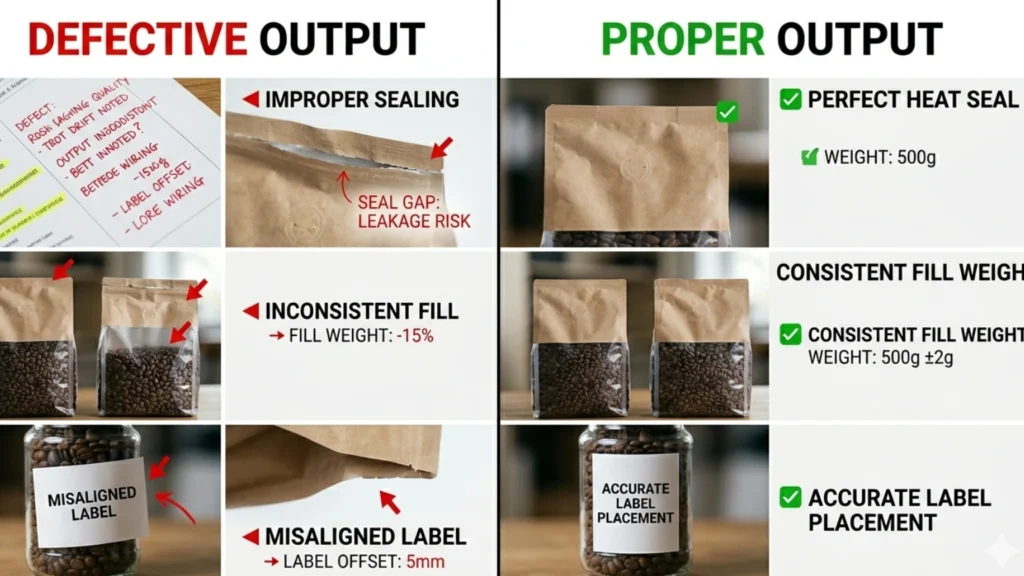
What holds a package together often fails without warning. When heat levels drift off target, seals grow thin or patchy. Old sealing bars leave gaps behind. Cheap parts fail faster than expected. Leaks follow close behind. Spoilage creeps in where protection should be tight. Customers notice when contents spill or smell odd.
Returns pile up quietly at first. Then complaints spread fast. Even perfect speed means nothing if the closure betrays every promise made on paper. These are classic packaging machine defects in China cases. Machines must prove themselves daily, not just once under showroom lights.
Inconsistent Output
Most of the time, a good packaging machine keeps things steady, fills stay the same, portions match up, and the looks remain clean. Off-kilter performance? Blame tired parts or dose controls that slipped out of tune, belts dragging at uneven rates, or sensors feeding wrong data. These are recurring packaging machine quality issues. Quality dips when rhythm breaks down, sure, yet rules get shaky too, especially where strict fill levels matter, like medicine, food, or industrial liquids.
Mechanical Failures
Out in the open, loose bits rattle around inside many machines made in China for packing goods. Misplaced pieces show up when things do not fit flush, often a hint that someone skipped checks while building them. Vibration too strong? That usually means corners were cut somewhere along the way. Over time, unchecked shaking wears out parts faster than expected.
Fix one thing late, and suddenly five others need work. These reflect deeper industrial machine quality issues China’s buyers encounter. Most flaws could be spotted just by looking closely before sending anything overseas.
Electrical and Control System Problems
Machines today fit with sensors, yet these pieces need help from steady wires and smart controls to run properly. When a sensor acts up, containers might stay empty even though the line keeps moving. Loose wire ends spark danger while confusing the system about what comes next. Control boxes sometimes freeze when coded too fast without enough checks along the way.
These are serious packaging machine problems China’s industries deal with. Problems like frayed cables or mixed-up signals never show clearly through screens miles away. Fixes after delivery chew up time plus cash nobody planned to spend.
Slow speeds and performance problems
Most people who buy machines complain they’re much slower than the seller said. A system meant to do sixty packages each minute might only manage forty when running live. That difference usually happens because tests happen in perfect labs, not with real products and full workloads.
These are common packaging machine quality issues. When the machine runs unevenly, halts too often, or cycles at odd rates, scheduling output becomes guesswork. It’s less about broken gear, more about misleading benchmarks.
Packaging Material Compatibility Problems
One wrong match between machine and packaging turns the whole thing into a paperweight, though plenty still ignore this fact. Film too thick? Material too stiff? Are pouches oddly sized? Heat acting up? These hiccups usually trace back to sellers stretching truths about how adaptable their gear really is.
Run trials first, always with the real stuff rolling off your line, never some stand-in picked at random. Many packaging processes follow established standards such as those detailed on Wikipedia’s Packaging page. These are overlooked packaging machine defects china scenarios.
Hidden Defects Buyers Often Miss
Hidden flaws often stay out of sight until later. Long after startup, certain problems finally show up, sometimes days or even weeks down the line. Inside machinery, unseen damage builds slowly, especially when devices are once used but labeled as fresh units. A deep check is usually needed to catch these inner weaknesses early through proper Chinese machinery defects inspection.
Parts like gears, bearings, or air-driven systems might seem fine at first if they came from unknown makers, yet break far sooner than expected.
Out of whack today, a sensor might seem fine, yet it nudges every reading just enough to matter. Over weeks, those tiny pushes add up, like drops filling a bowl nobody sees. Scales creeping off track do their damage silently, hiding behind normal-looking numbers. A clock running slow by seconds distorts entire batches without raising alarms.
Spotting these flaws takes looking differently, not harder, but asking questions most skip. Watch how data shifts at odd hours. Notice patterns when machines warm up. The clues wait in plain sight, only revealed through patient tracking of industrial machine quality issues China cases.
How to Detect Packaging Machine Defects
Before shipping, running tests helps spot flaws in packaging machines. One way is to do test cycles to see how things go. Performance checks give clues about reliability, too. Looking at parts closely might reveal hidden issues.
Output gets reviewed to make sure results meet standards. These steps are essential in China machinery defects inspection processes. Layers build up when steps combine like this. Strong confidence comes from stacking different checks one after another.
Conduct Trial Runs
Start by testing the machine using your real products and packaging, running it nonstop at the pace you need. That kind of extended check shows problems eyes alone would miss. Instead of a quick show, request a complete simulation of daily operations. See how steady the output stays over time. Watch for flaws in each unit produced.
Measure how fast cycles repeat without slowdowns. Record everything, especially defects and timing shifts. Since only hard data tells the true story, make sure every number gets written down during the run to catch packaging machine defects china early.
Inspect Machine Components
Start by looking closely at every piece of the equipment. Check whether everything fits together just as it should, while also spotting any signs of damage or swapped-out pieces. See how the seams, connections, and frame hold up under close observation; they must match what’s required. Seals, blades, and dispensing units, because those spots often show poor workmanship when corners get cut. This step helps uncover common machine defects China suppliers may hide.
Verify Output Quality
Start by testing the machine beyond just operation, and see how well it performs when left to run on its own. Quality checks matter most once automation takes over, so examine each filled unit carefully. Instead of assuming consistency, watch how precisely product amounts match targets every time. Seals must hold firm; look closely at their structure under normal working conditions.
Labels need correct positioning, not close, but exact alignment counts. Packaging should reflect what was planned down to the smallest details. Using your real supplies during trials reveals gaps between promise and reality. Results speak louder than specs when decisions are made later. Proper pre-shipment practices are also covered by resources from the U.S. International Trade Administration.
Check Machine Stability
Watch how the machine acts while running; look out for wobbles. If it shakes too much, makes strange sounds, cycles unevenly, or sensors act unpredictably, something might be off. Right from startup in actual use, a solid unit runs without hiccups. Smooth motion and steady patterns show it was built right. This helps identify industrial machine quality issues in China early.
Role of Pre-Shipment Inspection
Right before a machine heads out from the factory, someone checks it thoroughly on your behalf. This last look helps buyers working with Chinese suppliers stay confident about what they are getting. When an experienced person confirms the equipment matches your requirements, how it works, how it’s built, and whether it meets standards, you skip nasty surprises once it arrives.
This process is a key part of China machinery defects inspection. Finding problems late means little power to fix them cheaply or quickly. Skipping this step might seem fine until something goes wrong. For big machines, checking first isn’t extra; it’s just how smart deals get done.
Real Example: Defect Impact on Production
Picture a company buying a sealing machine from China because it seemed like a bargain after seeing just a brief clip online. Soon after starting work, about every sixth package ended up sealed poorly. Leaking products began showing up during shipping. Customers started complaining in large numbers. The brand had no choice but to pull items off shelves.
Losses piled high, wiping out any savings from the low upfront cost. This is a real-world case of packaging machine defects in China and severe packaging machine problems in China. A single test before shipment, under sixty minutes long, could have caught what went wrong. That one skipped check led straight to chaos.
Cost Impact of Machine Defects
Getting a faulty packaging machine hits the wallet hard, right from the start. Down time means money slips away daily, output drops, workers stand still, and deadlines get missed. Fixing it isn’t cheap either; tracking down parts takes effort, specialists need to be paid, and more hours vanish. These are long-term industrial machine quality issues China businesses face.
Late shipments or turned-down goods mean less income on top of everything else piling up. When things go badly wrong, broken delivery chains plus strained ties with buyers lead to expenses you cannot easily measure, yet still feel. Every time it happens, one truth stays: stopping flaws before they start takes less than cleaning them up afterward.
Common Mistakes Buyers Make
Some people buy broken equipment because of choices they could have avoided. Not checking the machine closely happens often, usually when deadlines loom or confidence in the seller feels strong. Believing everything the supplier says, like output numbers, quality reports, or what parts are used, without double-checking, leads to trouble just as much.
These mistakes directly lead to common machine defects China buyers complain about. Machines seem fine until they run as they would on the factory floor; skipping that step hides problems till repair isn’t an option. Picking the cheapest bid while ignoring how things are built saves little in the long haul, yet many still do it.
How to Avoid Packaging Machine Defects
Problems with packaging machines? Start by picking suppliers carefully, not just quickly. Look inside the factory itself, not only at brochures or promises. Check things firsthand before goods leave the dock. Finding faults once boxes arrive means reacting too late. That isn’t planning. It’s rolling dice. These steps reduce packaging machine defects china risks significantly.
Choose Reliable Suppliers
Start with suppliers who’ve actually handled your kind of packaging machines before. Skip the glossy brochures; ask for real customer contacts, proof of past output, and credentials someone else could check. When you push for details, trustworthy ones lean in. Those dodging questions? That tells its own story. This helps avoid packaging machine quality issues early.
Conduct Factory Audits
Before signing any deal, seeing how things run inside the facility matters most. A visit, either by yourself or by someone trained, shows exactly how parts are made, checked, and handled day to day. Machines reveal their condition only up close, not on paper. What workers do step by step tells more than promises ever could.
Problems spotted early won’t snowball later. Trust builds when actions match claims. Hidden flaws often show themselves during walkthroughs. Real talk happens face to face, not over email. Decisions land better with proof in hand. For more insights on avoiding common pitfalls, see guidance on how to avoid bad machine sourcing in China. This step supports proper China machinery defects inspection.
Perform Trial Runs
Like we said, testing machines before buying is mandatory. Skip any deal where you can’t see it running live using your own materials, hitting your needed pace, for more than just minutes. Watch how it behaves over hours. Write down every detail. Hold firm, fix all gaps in performance compared to what was promised, long before it ships. This prevents packaging machine problems China scenarios.
Use Third-Party Inspection
Out of sight, out of mind, unless someone else checks. Picture this: an outside team shows up, no ties to the seller, just facts. Their job? Watch how it runs, measure what it does, compare every piece to your list. Think twice before trusting promises alone. Machines speak through actions, not paperwork.
When results arrive in black and white, decisions get easier. You hold proof, not guesses. This is the core of China machinery defects inspection. Pre-shipment inspection in China. That report becomes your anchor, solid ground for saying yes, no, or fix it first
Role of a Machinery Sourcing Agent
When you are far away, unsure about tech details, or short on time, having someone focused just on finding machines makes things safer and cheaper. Starting at the beginning and going all the way through, a clear method keeps track of who supplies what, how good the equipment is, checks along the way, and ties everything together smoothly, reducing industrial machine quality issues China risks.
Every step of the way, Kingsler Machinery walks beside buyers during sourcing, keeping tight oversight throughout. Instead of guessing, they pinpoint packaging equipment providers that match your needs precisely, then confirm credibility with on-site factory checks.
Before anything ships, independent reviews assess how well machines operate and how solidly they’re built. That way, what arrives fits exactly what was agreed, nothing less, avoiding packaging machine defects and China surprises.
Out there, where deals get done, trust grows slowly. Kingsler Machinery keeps it real with suppliers by checking every detail, again and again. Being physically close means messages land clearly and problems shrink fast, yet records stay tight. Because of this rhythm, each step opens up before your eyes while shaky moments fade without noise.
Avoid defective machinery; get expert support to inspect and verify packaging machines before purchase and request pre-shipment inspection.
Best Practices for Machinery Quality Control
No matter if you hire help or go solo, certain checks are essential when buying equipment. Before it ships, someone must see the actual machine; getting it delivered isn’t the time to spot problems. Run it as it belongs in your shop, not just on a showroom floor. Write down everything: what came out during tests, what broke, what got fixed. These practices reduce packaging machine quality issues significantly. Right from the start, think about upkeep; knowing how often parts need replacing keeps things running years later.
Quick Checklist for Buyers
Before accepting any packaging machine from a Chinese supplier, work through these key verification steps to avoid common machine defects China:
- Check machine specifications against your original requirements, including output speed, dimensions, material compatibility, and power requirements.
- Inspect all components for correct assembly, build quality, and the absence of visible damage or substituted parts.
- Test output quality with your actual products and packaging materials under representative production conditions.
- Verify performance against the agreed specification, including speed, consistency, reject rates, and seal integrity.
Final Takeaway
A glitch in machinery might halt output fast, hitting hard where it counts. Beyond fixing parts lies wasted time, unmet deadlines, frustrated buyers, and trust worn thin across delivery networks. Most of these stem from packaging machine defects china and broader industrial machine quality issues China.
Stopping trouble early costs less than cleaning up later, no surprise there. Smart moves help dodge these issues: pick vendors with care, check how they operate on site, test equipment while it runs, and rely on outside experts when something feels off or out of view.
Ready to source reliable packaging machinery? Get expert inspection and sourcing support before making your investment.
FAQs
What are common defects in packaging machines?
Common defects in packaging machines include poor sealing, inconsistent output, mechanical failures, electrical issues, and slow performance. These problems often result from weak quality control, cheap materials, or improper assembly.
How to detect machine defects before buying?
To detect defects before buying, conduct trial runs using real materials, inspect all machine components closely, and verify output quality under working conditions.
Can inspection prevent machine problems?
Yes, inspection plays a major role in preventing machine problems. Pre-shipment inspection ensures the machine meets specifications, performs correctly, and has no visible or hidden flaws.
What causes machinery defects in China?
Machinery defects in China are often caused by inconsistent quality control, use of low-grade materials, rushed production, and lack of proper testing.
How to avoid faulty packaging machines?
To avoid faulty packaging machines, choose reliable suppliers, conduct factory audits, perform detailed trial runs, and use third-party inspections. Taking these steps reduces the chances of dealing with packaging machine defects china significantly.